
Propagation
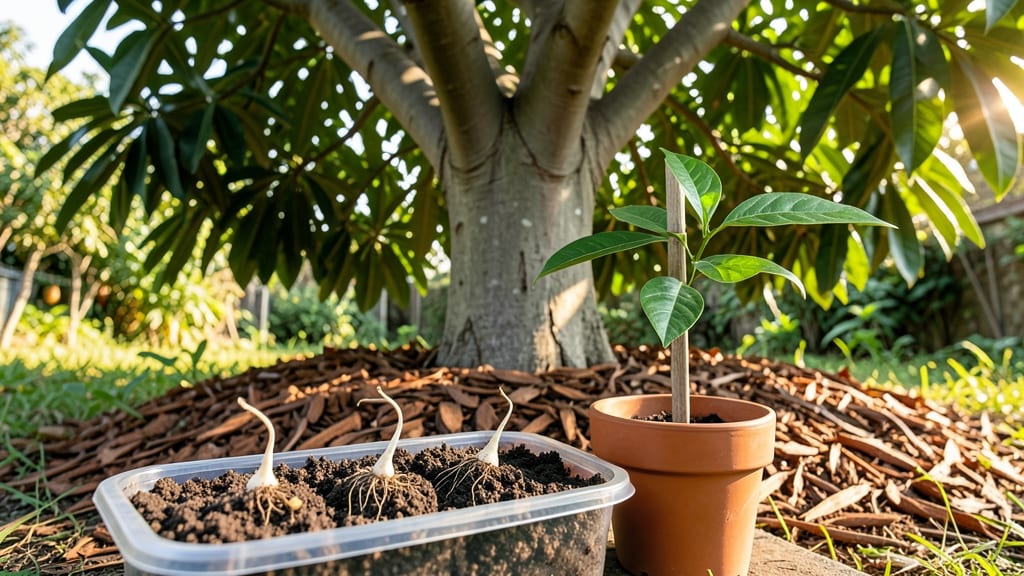
Growing a mango tree from seed to fruit is like nurturing a tiny dream into a tropical reality. 🌱 The journey starts with a single seed that, with patience and care, can produce fruit within 3 years—if you follow the right steps.
I’ve grown three from seed, and the first ripe mango I picked from my own tree was worth every late-night watering and pruning session.
The secret isn’t just time—it’s knowing when to act. Start with a fresh, plump seed (no dried-out store-bought ones), soak it overnight, and plant it in a pot with well-draining soil. Keep it warm and moist, and within 2-4 weeks, you’ll see a sprout.
This is where most people rush—transplanting too soon—but hold off until the seedling has 3-4 true leaves and a sturdy stem.
By year three, you’ll be shaping the tree with pruning to encourage strong branches and fruit production. The first blooms might not yield fruit, but don’t give up—consistent care turns that into a harvest of sweet, juicy mangoes by year four or five.
The smell of ripe fruit on the tree is the best reward, and it’s all within reach if you start now.
This method works for any climate that can handle tropical plants, though colder regions may need container growing or indoor overwintering. The key is consistency—watering, sunlight, and a little extra love when challenges pop up. Let’s get those seeds sprouting!
📚 In This Guide
- What you need
- Instructions
- Tips and common mistakes
- Wrapping up and next steps
What you need
- ● Mango seed: Fresh, plump seed from a ripe, organic mango (1 per tree). Pro tip: 💡 Avoid hybrid or grafted mangoes—they may not produce true fruit!
- ○ Well-draining potting mix: 2–3 gallons of a blend of coconut coir, perlite, and compost (70:20:10 ratio). Optional: Add worm castings for extra nutrients.
- ● Pot or container: 12–18" deep with drainage holes (1 per seedling). Upgrade tip: ✨ Use a grow bag for flexibility as the tree matures.
- ● Watering can or spray bottle: With a fine nozzle for gentle hydration.
- ● Humidity dome or plastic wrap: To retain moisture during germination.
- ● Grow lights or sunny windowsill: 6–8 hours of indirect light daily (or full sun if outdoors).
- ● Fertilizer: Balanced liquid fertilizer (e.g., 10-10-10) or organic options like fish emulsion.
- ● Pruning shears: Sharp, sterilized pair for shaping and maintenance.
- ● Warm climate: Mango trees thrive in USDA Zones 10–11. Cold warning: 🌡️ If you live in cooler zones, grow in containers and bring indoors during winter.
- ● Humidity: 50%+ for optimal germination and growth.
- ● Patience: Seed-to-fruit can take 3–5 years (or longer!).
- ● Soil moisture meter to track hydration levels.
- ● Rooting hormone for faster germination (dip seed before planting).
- ● Mulch (straw or wood chips) to retain soil moisture.
- ● Support stake (for young trees in windy areas).
Step-by-step instructions for growing a mango tree from seed to fruit
Here's how I turn a single mango pit into a thriving tree that produces fruit in just three years.
🌱 Step 1: Extract and Prepare the Seed
Start with a fresh, organic mango pit—avoid those treated with fungicides. Rinse it thoroughly to remove any fruit residue, then let it dry completely for 24 hours. I like to use a paper towel to gently scrub away any remaining flesh, but don't damage the hard shell.
Place the clean pit in a small plastic bag with a damp paper towel. Seal it loosely and store in a warm spot (70-80°F) for 2-3 weeks. Check weekly—when you see a tiny crack or sprout, it's ready. This step mimics the tropical conditions that trigger germination. If the pit stays dry, it won't sprout, so keep that towel damp but not soggy.
🌱 Step 2: Plant the Germinated Seed
Fill a 6-inch pot with well-draining potting mix (I use a blend of 60% peat moss, 30% perlite, and 10% coconut coir). Make a small hole about 1 inch deep and place the cracked pit with the sprout facing upward. Cover it lightly with soil, leaving the top half exposed to light.
Water gently until moisture reaches the bottom of the pot, then place it in bright, indirect light. A south-facing window works well, but avoid direct sun until the seedling is established. Keep the soil consistently moist but never waterlogged—mango seeds rot easily. You'll see the first true leaves in 4-6 weeks, signaling it's time to transplant.
☀️ Step 3: Transplant and Provide Optimal Growing Conditions
Once your seedling has 3-4 true leaves, move it to a 1-gallon pot with fresh potting mix. Mango trees need excellent drainage, so add a handful of coarse sand or perlite to the mix. Place the pot in a location with 6-8 hours of direct sunlight daily—a greenhouse or sunny patio works best.
Water deeply when the top 1-2 inches of soil feel dry, and fertilize monthly with a balanced, water-soluble fertilizer (10-10-10) diluted to half strength. In cooler months, reduce watering slightly—overwatering is the #1 killer of young mango trees. Watch for leggy growth; if the stem stretches too tall, it needs more light or a shorter day length.
🪴 Step 4: Prune and Support Growth for Fruit Production
When your tree reaches 3 feet tall, prune it back by one-third to encourage bushier growth. Remove any dead or weak branches, and cut just above a leaf node where new growth can sprout. This step is critical—unpruned mango trees grow tall and spindly with few fruit-bearing branches.
By year three, your tree should be in a 15-gallon pot or planted in the ground if you live in a tropical or subtropical climate. If frost is possible, keep it indoors near a sunny window or under grow lights. Mango trees need warmth year-round to fruit—temperatures below 50°F can kill the tree. You'll see small flowers in 4-5 years, but with patience and care, your first fruit could appear as early as year three.
⏰ Step 5: Care for the Tree During Fruit Development
Once flowers appear, hand-pollinate them with a small brush to ensure fertilization. Mango trees rely on insects or wind for pollination, but indoor trees need help. Focus on 10-15 flowers per branch—overloading the tree can reduce fruit quality. Thin out excess flowers to leave room for the remaining fruit to grow.
Water consistently but reduce frequency slightly as fruit develops—too much water dilutes flavor. Fertilize every 2 months with a high-potassium fertilizer (like 5-10-10) to support fruiting. Harvest your mango when it gives slightly to gentle pressure and has a sweet scent. It may take 3-5 years from seed to fruit, but the wait is worth it for that first tropical harvest.
Tips & tricks for growing a mango tree from seed
Turning a simple mango pit into a fruit-bearing tree takes patience—but these little tricks make all the difference.
Germination Hack: The 24-hour drying period for your pit isn't just about cleanliness—it prevents mold growth in that damp plastic bag later. I've learned the hard way that skipping this step often leads to rot before sprouting. Once dried, place the pit in the bag with the damp towel and seal it loosely (this allows just enough airflow to prevent bacterial buildup). The warm 70-80°F range mimics tropical humidity—if your home runs cooler, consider using a seedling heat mat underneath the bag.
Lighting Secret: In Step 2, when planting your seedling, bright indirect light is crucial—but don't rush to full sun. The first true leaves (those 4-6 weeks away) are delicate and can scorch easily. I use a grow light on a timer for 12 hours daily when natural light isn't sufficient. Watch for leaves that look pale or stretched—they're begging for more light, but gradually increase exposure over a week to avoid shock.
Pruning Precision: When your tree hits 3 feet tall in Step 4, that one-third pruning might seem drastic, but it's what creates the sturdy, bushy structure needed for fruit production. Always cut just above a leaf node (the bump where leaves attach)—this is where new growth will sprout. I like to make my cuts at a 45-degree angle to prevent water from pooling on the wound, which could invite disease.
Fertilizer Timing: That monthly 10-10-10 fertilizer schedule in Step 3 is non-negotiable for the first year, but here's what I've noticed: If your tree shows signs of yellowing leaves (a classic nitrogen deficiency), increase to biweekly feedings temporarily. Conversely, if new growth looks soft and rubbery, cut back to every 6 weeks—too much nitrogen delays flowering. Always water thoroughly before fertilizing to prevent root burn.
Pro Tips for Mango Tree From Seed To Fruit
- Turning a simple mango pit into a fruit-bearing tree takes patience—but these little tricks make all the difference.
- Germination Hack: The 24-hour drying period for your pit isn't just about cleanliness—it prevents mold growth in that damp plastic bag later.
- Lighting Secret: In Step 2, when planting your seedling, bright indirect light is crucial—but don't rush to full sun.
Frequently asked questions
Got questions about growing a mango tree from seed? You’re not alone! Here are some of the most common queries—and their answers—to help you avoid pitfalls and boost your success rate.
How long does it take for a mango seed to sprout?
A mango seed typically sprouts within 2–4 weeks if kept in warm, moist conditions. If you don’t see sprouts after 6 weeks, check the seed’s viability—some seeds may be old or damaged. Patience is key, but don’t let it dry out!
Will my seed-grown mango tree produce fruit?
Yes, but it may take 3–5 years (or longer) for a seedling to bear fruit—and the quality won’t match grafted trees. Seedlings are unpredictable; their fruit might be smaller, less sweet, or even inedible. For reliable harvests, consider grafting later.
What’s the best climate for growing a mango tree from seed?
Mango trees thrive in tropical/subtropical climates (USDA Zones 10–11) with warm temperatures (70–90°F), full sun, and well-draining soil. If you’re in a cooler zone, grow it in a container and bring it indoors during winter.
Why is my mango seedling dying? Common issues and fixes.
- Yellow leaves: Overwatering or poor drainage. Let the soil dry slightly between waterings.
- Wilting or drooping: Underwatering or root rot. Check soil moisture and ensure pots have drainage holes.
- No growth after sprouting: Lack of light or nutrients. Move to a sunnier spot and fertilize lightly with a balanced fertilizer.
Can I grow a mango tree indoors?
Yes! Start seedlings indoors in bright, indirect light (like a south-facing window). Use a grow light if natural light is insufficient. Once established, transplant outdoors when temperatures stay above 50°F at night.
Wrapping up and next steps
Growing a mango tree from seed to fruit is a rewarding journey that blends patience, care, and a sprinkle of tropical magic! 🌱 With the right steps—from selecting your seed to nurturing your sapling—you’ll soon enjoy the sweet taste of homegrown success.
Remember, consistency is key, and every tiny leaf or blossom is a sign of progress.
Ready to take the next step? Start by planting your seed today and watch your tropical dream unfold. Share your progress with fellow gardeners, and soon, you’ll be savoring the juiciest mangoes straight from your very own tree! 🍈✨