
Lawn
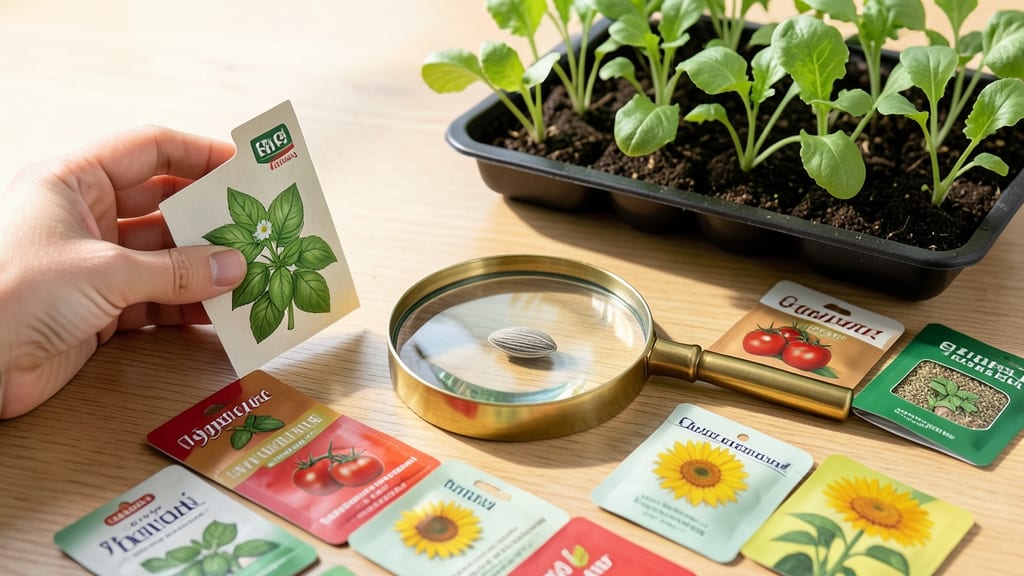
A seed identification guide saves you from planting the wrong grass for your climate. 🌱 I’ve spent years sorting through seed mixes, and the difference between smooth brome and Kentucky bluegrass isn’t just academic—it’s the difference between a lush yard and a patchy one.
A single misidentified seed can throw off your entire lawn project.
The key is focusing on three details: seed shape (round, oval, or elongated?), texture (smooth or ridged?), and size (pinhead-sized or pea-sized?). Most seed guides show these traits in simple diagrams, but I’ve found that holding them against a white card under good light makes the differences pop.
Even a basic magnifying glass helps spot fine details that separate ryegrass from fescue.
Once you master these basics, you’ll spot the subtle clues that tell you whether you’re looking at cool-season or warm-season grass. That’s when you’ll start seeing your lawn’s potential—thicker growth, better drought resistance, and the exact look you want.
The right seed mix means fewer weeds and easier maintenance down the road.
For beginners, I recommend starting with just 10 common varieties—like tall fescue or perennial ryegrass—and building your visual library from there. Seed catalogs often include close-up photos, and apps like PlantNet can help double-check tricky ones. Accuracy here means fewer second-guesses later.
📚 In This Guide
- What you need
- Instructions
- Tips and common mistakes
- Wrapping up and next steps
What you need
- ● 50+ Seed Identification Guide (Printed or Digital): Printed copy (8.5” x 11” or larger for clarity)
- ● OR a tablet/phone with a high-resolution screen (minimum 1080p)
- ● Hand Lens or Magnifying Glass: 10x magnification (for close-up details)
- ● Ruler or Measuring Tape: 12” (30 cm) for seed size comparisons
- ● Notebook & Pen: For recording observations (spiral-bound recommended)
- ● Seed Samples: 5–10 seeds per variety (fresh or dried, but not moldy)
- ● White or Light-Colored Tray: 12” x 12” (for sorting seeds under natural light)
- ● Tweezers: Fine-tip, stainless steel (for delicate seed handling)
- ● Moisture-Free Storage: Airtight containers (e.g., small jars with lids)
- ● Digital Scale: 0.01g precision (for weight-based ID)
- ● UV Flashlight: To check for fluorescence in seed coatings
- ● Seed Catalog or App: For cross-referencing (e.g., Seed Savers Exchange)
- ● Reference Books: The Seed Garden Handbook by J.L. Hudson
- ● Identifying and Growing Native Plants (regional guides)
- ○ Seed Germination Kit: For testing viability (optional but fun!)
How to identify common lawn seed varieties visually
Here's the method I use to tell fescue from ryegrass at a glance—no microscope needed.
🌱 Step 1: Examine Seed Shape and Size
Start by comparing seed size to a standard reference. Most common lawn seeds fall into three categories: small (under 1/8 inch), medium (1/8 to 1/4 inch), or large (over 1/4 inch). Tiny, oval seeds like annual ryegrass are about the size of a pinhead, while tall fescue seeds are more elongated and resemble tiny grains of rice.
Hold seeds against a white background to spot subtle color variations. Bluegrass seeds often have a faint bluish tint, while ryegrass seeds appear more golden. This visual cue helps distinguish cool-season grasses quickly. I keep a small magnifying glass handy—it reveals tiny surface textures that can be telltale signs of specific varieties.
🌿 Step 2: Check for Seed Coat Characteristics
The seed coat often holds the key to identification. Smooth, shiny seeds typically belong to perennial ryegrass or tall fescue, while rough or slightly hairy coatings indicate fine fescue varieties. Run your thumb gently over the seed surface—you'll feel the difference immediately between the sleekness of Kentucky bluegrass and the slight roughness of creeping red fescue.
Look for distinct markings or patterns. Some seeds, like annual bluegrass, may have faint vertical lines or ridges. Others, such as buffalo grass, have a more uniform, matte appearance. This step is where patience pays off—taking a few minutes to examine each seed closely prevents costly misidentifications later.
☀️ Step 3: Compare Seed Color and Texture
Color is your fastest visual clue. Cool-season grasses like Kentucky bluegrass and fescue tend to have lighter, more neutral tones, while warm-season grasses such as Bermuda and Zoysia often appear darker or have reddish-brown hues. I keep a small color chart handy for reference—it helps distinguish between similar shades, like the subtle difference between fine fescue (silvery-gray) and chewing's fescue (dull green).
Texture matters too. Seeds with a slightly waxy coating, like tall fescue, resist moisture longer than porous seeds like annual ryegrass. This trait becomes obvious when you sprinkle seeds onto a damp paper towel—waxy seeds bead up slightly, while porous seeds absorb moisture immediately. It’s a simple test that saves time when comparing unknown samples.
📏 Step 4: Use a Ruler for Precise Measurements
Lay a ruler next to a small pile of seeds and measure the longest seeds in your sample. Fine fescue seeds typically measure between 1/16 and 1/8 inch, while tall fescue seeds are closer to 1/4 inch. This step eliminates guesswork when distinguishing between similar-looking grasses. I mark my ruler with colored tape at key measurement points—it speeds up the process when identifying large batches.
For seeds that don’t fit neatly into standard categories, count how many seeds fit along a 1-inch segment of the ruler. Annual ryegrass seeds, for example, will pack tightly—often 10 or more seeds per inchKentucky bluegrass seeds are more spaced out, with only 5-7 seeds per inch. This density check is especially useful for distinguishing between fine and broadleaf grasses.
📸 Step 5: Take Reference Photos for Comparison
Snap clear photos of each seed variety under natural light, using a white background for consistency. Label each image with the suspected variety and any distinguishing traits you’ve observed. Over time, you’ll build a visual library that becomes your go-to resource for tricky identifications. I store these photos in a dedicated folder on my phone, organized by grass type.
When in doubt, compare your sample to trusted online resources or seed catalogs. Many reputable suppliers offer high-resolution images of their seed varieties, complete with size and shape details. This step is where technology becomes your best friend—it turns a frustrating guess into a confident identification in seconds.
Tips & tricks for visual seed identification
These simple strategies will help you become a seed identification pro in no time—even tricky varieties will reveal their secrets.
Lighting Matters: Natural daylight is your best friend for accurate color assessment. I always work near a north-facing window or under a bright LED lamp to avoid color distortion. Artificial lighting can make seeds appear darker or lighter than they actually are, leading to misidentifications. If you're indoors, use a daylight-balanced bulb—it mimics natural light perfectly and makes those subtle color differences pop.
Seed Surface Texture: The texture of a seed's surface can be a game-changer for identification. For example, creeping red fescue seeds have a slightly rough texture that's almost velvety to the touch, while perennial ryegrass seeds feel smooth like polished river stones. I developed this trick after struggling to distinguish between these two varieties—just run your thumb across the seeds, and the difference becomes immediately obvious. This tactile approach works especially well when visual clues are ambiguous.
Comparison Samples: Keep a small reference collection of known seed varieties in labeled envelopes. When you're unsure about an unknown sample, compare it directly against your reference seeds. I maintain a collection of about 10 common varieties in my desk drawer—it's become my go-to resource for tricky identifications. This method eliminates guesswork by providing a direct visual comparison, and it's particularly helpful when dealing with seeds that have similar shapes or sizes.
Moisture Test: The moisture absorption test from Step 3 is a hidden gem for distinguishing between waxy and porous seeds. Place a small sample of seeds on a damp paper towel and observe how quickly they absorb moisture. Waxy-coated seeds like tall fescue will resist absorption, while porous seeds like annual ryegrass will darken and spread out within seconds. This simple test reveals characteristics that aren't always visible to the naked eye, and it's especially useful when you're working with seeds that look nearly identical at first glance.
Pro Tips for Seed Identification Guide
- These simple strategies will help you become a seed identification pro in no time—even tricky varieties will reveal t...
- Lighting Matters: Natural daylight is your best friend for accurate color assessment. I always work near a north-faci...
- Seed Surface Texture: The texture of a seed's surface can be a game-changer for identification. For example, creeping...
Frequently asked questions
Got questions about identifying lawn seeds? You’re not alone!
Here are answers to the most common queries—no green thumb required.
How can I tell the difference between grass seeds and weed seeds?
Grass seeds are usually larger, smoother, and more uniform in shape (like ryegrass or fescue), while weed seeds are often smaller, jagged, or irregular (e.g., crabgrass or chickweed). Check for seed coats—grass seeds are typically glossy or hairy, whereas weed seeds may look dull or spiky. When in doubt, compare with a seed identification guide or use a magnifying glass!
How long does it take to germinate lawn seeds after planting?
Germination time varies by type:
- Cool-season grasses (e.g., Kentucky bluegrass, fescue): 7–21 days
- Warm-season grasses (e.g., Bermuda, Zoysia): 10–30 days
What’s the best way to store leftover lawn seed?
Store seeds in a cool (50–60°F), dry place like a sealed container or airtight bag with a desiccant packet. Avoid plastic bags—moisture ruins seeds! Label the container with the type and purchase date (most seeds stay viable for 1–2 years, though some, like perennial ryegrass, last longer).
My seeds aren’t sprouting—what could be wrong?
Troubleshoot with this quick checklist:
- Depth: Too deep? Most seeds need ¼-inch coverage max.
- Water: Inconsistent moisture? Keep soil damp (like a wrung-out sponge).
- Light: Shade-loving seeds (e.g., fine fescue) need indirect sun.
- Temp: Cool-season seeds won’t sprout in 80°F+ soil.
Can I mix different grass seed varieties in one lawn?
Yes! Mixing complementary varieties (e.g., tall fescue + Kentucky bluegrass) can improve drought resistance, color, and durability. Just ensure they share similar growing conditions (sun/shade, soil type). Avoid mixing aggressive spreaders (like Bermuda) with delicate grasses—they’ll outcompete them. Pre-mixed blends (labeled for your climate) simplify the process!
Wrapping up and next steps
Mastering seed identification is your first step toward a lush, vibrant lawn—and you’ve just unlocked the key! 🌱 Whether you’re troubleshooting bare patches or planning a new garden, recognizing seed types empowers you to make informed choices.
Now that you’ve explored our visual key, take that knowledge and put it into action.
Next steps:
- Grab a sample of your lawn seeds and compare them to our guide.
- Test a small patch to see which variety thrives best in your climate.
- Share your findings with fellow gardeners—every expert was once a beginner!