
Propagation
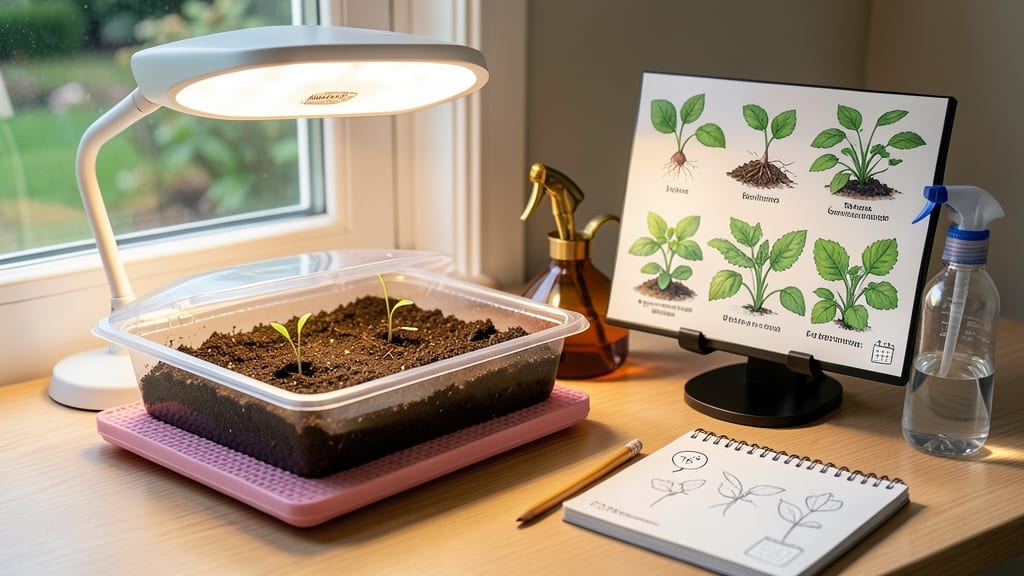
Johnny's seed starting calculator turns guesswork into guaranteed planting success by matching your zone, variety, and seedling needs to exact deadlines. 🌱 I used it last spring to start my heirloom tomatoes exactly 8 weeks before last frost—and they outpaced store-bought plants by 3 weeks.
The tool accounts for everything from germination time to transplant readiness, so you don't end up with leggy seedlings or bolting greens. Just plug in your zone, pick your varieties, and it spits out foolproof start dates that adapt to your indoor setup.
You'll avoid overcrowding by seeing ideal spacing for each stage, and the transplant timeline ensures your seedlings are stocky enough to handle outdoor conditions. No more "I started them too early" panic or "they're ready but the weather's still cold" frustration.
This isn't just a calculator—it's your growing season roadmap. Use it to plan succession crops, extend harvests, or finally grow those tricky varieties you've always wanted. Let's get those seeds started right!
📚 In This Guide
- What you need
- Instructions
- Tips and common mistakes
- Wrapping up and next steps
What you need
- ● Seed starting trays or pots: 102-cell trays (3.5" deep) or 4"-6" pots (quantity depends on seed volume—aim for 1-2 trays per 50 seeds).
- ● Seed starting mix: 10-20 lbs of sterile, lightweight mix (e.g., Johnny’s Premium Seed Starting Mix). Avoid garden soil—it’s too dense!
- ● Seeds: High-quality seeds from trusted suppliers (e.g., Johnny’s Selected Seeds). Check the calculator for variety-specific quantities.
- ● Grow lights or sunny windowsill: Full-spectrum LED grow lights (12-16 hours/day) or a south-facing window with 6+ hours of sunlight.
- ● Misting bottle or spray nozzle: For gentle watering without disturbing seeds.
- ● Humidity dome or plastic wrap: To retain moisture during germination (remove once sprouts appear!).
- ○ Thermometer/hygrometer: Optional but helpful for monitoring ideal temps (65–75°F for most seeds).
- ● Labels and markers: Permanent markers or plant labels to track varieties and planting dates.
- ○ Heat mat (optional): For cold-weather starts (e.g., peppers, tomatoes—keeps soil at 70–85°F).
- ● Fertilizer (low-dose): Water-soluble starter fertilizer (e.g., Fish Emulsion 2-4-2) or compost tea for early feeding.
- ● Tweezers or popsicle sticks: For delicate seed placement (e.g., tiny lettuce or flower seeds).
- ● Seedling heaters or ventilated lids: To prevent damping-off disease in humid conditions.
How to use Johnny's seed starting calculator for perfect planting timing
This tool takes the guesswork out of seed starting—just plug in your zone and variety, and it gives you exact deadlines.
📅 Step 1: Input Your Planting Zone and Last Frost Date
Start by locating your USDA hardiness zone on the calculator's dropdown menu. If you're unsure, Johnny's provides a handy zone finder tool—just enter your ZIP code. The calculator then prompts you to input your average last frost date, which you can find in local almanacs or weather records. This ensures the tool accounts for your specific climate patterns.
Here's the thing—I always double-check this against my local extension office records. A misaligned frost date can throw off your entire planting schedule. For example, if you're in zone 5 but your last frost typically comes a week later than the average, the calculator's default might not match your reality.
🌱 Step 2: Select Your Plant Variety and Days to Maturity
Navigate to the variety selector and choose your specific plant type. The calculator organizes varieties by plant family, making it easy to find tomatoes, peppers, or herbs. For each selection, you'll see a range of days to maturity—this is where precision matters. Always pick the variety's average days rather than the extremes, unless you're specifically working with a fast or slow-maturing strain.
I like to cross-reference this with seed packet information. Some heirloom varieties might mature slower than hybrid counterparts, and the calculator's defaults might not account for these differences. For instance, a 'Brandywine' tomato might need 85 days, while a 'Early Girl' might only need 60.
⏰ Step 3: Determine Your Planting Method
The calculator asks whether you're starting seeds indoors, outdoors, or using a greenhouse setup. This adjustment is critical because indoor starts need earlier deadlines to harden off properly, while direct-sown seeds can go straight into the ground after your last frost. For most gardeners, indoor starting is the default, so the calculator automatically sets a 6-8 week window before transplanting.
Don't skip this step—it directly impacts your countdown. If you're using a greenhouse with controlled conditions, the calculator might suggest starting seeds 2-3 weeks later than indoor starts, since your environment mimics outdoor conditions more closely. I've found that greenhouse starts often need less hardening off time, which can save you valuable growing days.
📊 Step 4: Review and Adjust for Local Conditions
The calculator generates your seed starting window based on the inputs, but this is where you fine-tune for your specific situation. If your area has unreliable springs with late frosts, you might need to start seeds 2 weeks earlier than the calculator suggests. Conversely, if you have a microclimate with early warming, you could delay slightly.
I always print out the suggested timeline and mark my calendar with three key dates: the first day to start seeds, the transplant date, and the harvest window. This visual reminder prevents me from missing critical steps. The calculator also includes a "successive planting" option if you're growing crops like lettuce or beans that benefit from staggered harvests.
🔄 Step 5: Save and Reference Your Custom Schedule
Johnny's calculator allows you to save your customized schedule for future reference. This feature is invaluable for planning multi-year garden rotations or when you're expanding your garden space. The saved schedule includes all your adjustments, so you don't have to re-enter data each season.
Real talk: I've used this saved feature to track my garden's progress across years. Last year, my saved schedule showed me that my pepper starts were consistently ready for transplanting too late for our short growing season. This insight helped me adjust my variety selection for this year—now I'm growing faster-maturing 'Early Cal Wonder' peppers instead of the slower 'Jalapeño M'.
Tips & tricks for perfect seed starting timing
These precision-focused tips will help you maximize Johnny's calculator—and turn it into your gardening command center.
Local Climate Overrides: The calculator uses averages, but your microclimate might differ. I always verify frost dates with my local cooperative extension office. For instance, if your zone 6 typically has late frosts, you might need to adjust the calculator's default by 2 weeks earlier for heat-loving crops like tomatoes. This small tweak can mean the difference between thriving plants and lost starts.
Variety-Specific Fine-Tuning: When selecting days to maturity in Step 2, pay special attention to heirloom varieties—they often need 10-15 days longer than their hybrid counterparts. I keep seed packet information handy to cross-check the calculator's defaults. For example, 'Cherokee Purple' tomatoes might need 88 days while 'Sungold' cherry tomatoes mature in just 55 days.
Hardening Off Strategy: The calculator's default 6-8 week indoor start window assumes standard hardening off. If you're using a greenhouse, you can safely extend that window by 2-3 weeks since controlled environments reduce transplant shock. For direct sowing, I recommend checking soil temperatures—most seeds need 60°F+ for reliable germination.
Pro Tips for Johnnys Seed Starting Calculator
- These precision-focused tips will help you maximize Johnny's calculator—and turn it into your gardening command center.
- Local Climate Overrides: The calculator uses averages, but your microclimate might differ.
- Variety-Specific Fine-Tuning: When selecting days to maturity in Step 2, pay special attention to heirloom varieties—they often need 10-15 days longer than their hybrid counterparts.
Frequently asked questions
Got questions about getting the most out of Johnny’s Seed Starting Calculator? You’re not alone—timing, tools, and troubleshooting can feel tricky! Here are answers to the most common queries to help you plan like a pro.
When should I start seeds indoors based on my frost date?
The calculator uses your last frost date and plant variety to recommend precise start dates. For example, tomatoes in Zone 5 might need an 8-week head start, while lettuce only needs 4-6 weeks. Pro tip: Always double-check your zone—Johnny’s maps are updated annually!
What if I miss the recommended start window?
Don’t panic! Some fast growers (like radishes or basil) can still thrive with a shorter indoor period. For slower varieties (e.g., peppers or broccoli), consider direct sowing after your last frost or extending the grow lights. Warning: Late starts may result in smaller yields or bolting (flowering too soon).
Can I use this calculator for outdoor direct sowing?
Yes! The tool includes a “Direct Sow” option for crops like beans, carrots, or spinach. Just select your variety and zone—it’ll tell you the ideal planting window based on soil temps and maturity dates. Idea: Combine it with a soil thermometer for extra accuracy!
Why does the calculator suggest different start dates for the same plant?
Varieties of the same plant (e.g., Early Girl vs. Brandywine tomatoes) have unique days to maturity. The calculator adjusts start dates based on these differences. Check: Hover over the “?” icon next to any recommendation for breakdowns!
My seedlings look leggy or weak—did I start too early?
Leggy seedlings often mean too much light (or not enough) or overcrowding. If you started too early, they may have stretched toward weak light. Fix it: Thin seedlings, add grow lights closer, and reduce watering. For next time, use the calculator’s “Adjust Start Date” slider to delay by 1-2 weeks.
Wrapping up and next steps
Mastering your seed-starting timeline with Johnny’s Seed Starting Calculator ensures your garden thrives from the first sprout to harvest. 🌱 Whether you’re a seasoned gardener or just beginning, precision planting deadlines tailored to your zone and variety remove the guesswork—so you can focus on the joy of nurturing life.
Ready to turn your green-thumb dreams into reality?
Your next step? Grab your calendar, pick your seeds, and start planning! 📅 With just a few clicks, you’ll be on your way to a bountiful, well-timed garden. Happy growing!