
Propagation
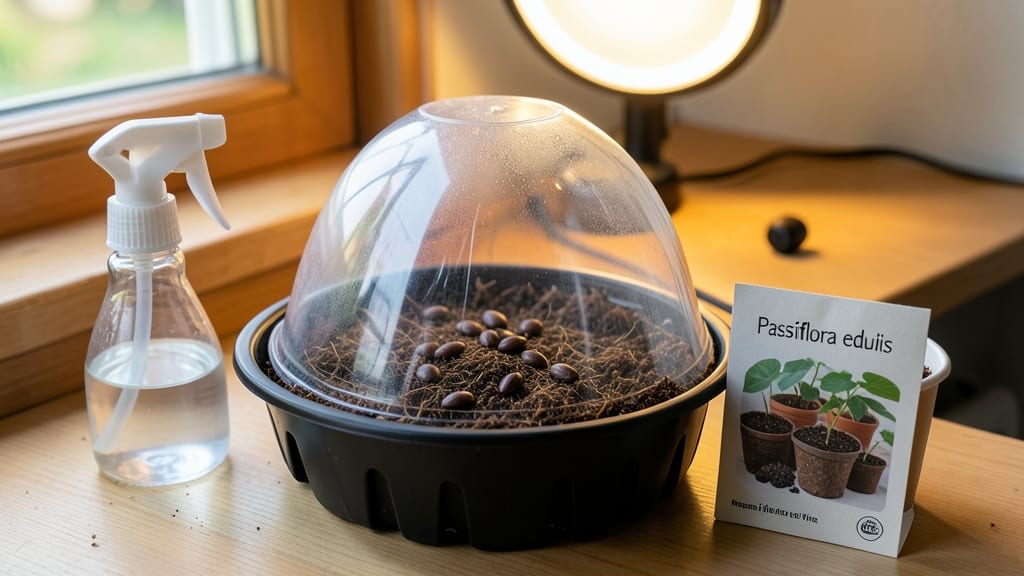
Passion flower seed germination needs a twist-free trick to break dormancy—soaking them in warm water for 24 hours softens that tough outer shell and gets them ready to sprout. 🌱 I’ve struggled with passion flowers for years, and this one step cut my germination time from months to weeks.
The key is patience and the right conditions, because these seeds won’t rush—unless you help them along.
You’ll need a shallow tray, damp paper towels, and a warm spot (around 75°F) to create the perfect cozy environment. Plant the seeds just below the soil surface—no deeper than ¼ inch—and keep the mix consistently moist but never soggy.
Passion flowers hate being waterlogged, so drainage is non-negotiable.
Once they sprout, expect thin stems and delicate leaves—handle them like glass. Transplant carefully when they’ve got 2-3 sets of true leaves, and give them bright, indirect light to avoid leggy growth.
The first blooms might take a year, but the wait is worth it for those stunning, exotic flowers.
This method works for all passion flower varieties, from Passiflora caerulea to tropical types. The secret? Consistency. Keep the soil warm, the air humid, and the patience high—these seeds reward persistence with vibrant, thriving vines that’ll climb anything in your garden.
📚 In This Guide
- What you need
- Instructions
- Tips and common mistakes
- Wrapping up and next steps
What you need
- ● Fresh passion flower seeds: Collect seeds from a healthy, ripe passion fruit (or purchase organic, non-hybrid seeds). Aim for at least 5–10 seeds to account for germination variability.
- ● Twist-off tool or knife: A small, sharp knife or a dedicated seed-extraction tool to carefully separate seeds from the fruit pulp without damaging them.
- ● Clean water: Filtered or distilled water for rinsing seeds (avoid tap water with chlorine).
- ● Paper towels or seed germination tray: Use unbleached paper towels or a dedicated seed-starting tray with a humidity dome.
- ● Spray bottle: For lightly misting seeds to maintain moisture without over-saturating.
- ● Plastic bag or airtight container: A quart-sized ziplock bag or small container to create a humid environment for germination.
- ● Small pots or seedling trays: 2–3 inch pots with drainage holes or a seedling tray with a growing medium (e.g., coconut coir or peat moss).
- ● Growing medium: A well-draining mix like 50% peat moss + 50% perlite or a commercial seed-starting soil.
- ○ Heat mat (optional but helpful): Maintains soil temperature at 70–80°F (21–27°C) for faster germination.
- ● Seed germination accelerator: Products like Rootone or humic acid to boost sprout success.
- ● Grow lights: LED or fluorescent lights for seedlings if natural light is insufficient (12–16 hours/day).
- ● Fertilizer (diluted): A balanced, water-soluble fertilizer (e.g., 10-10-10) once seedlings develop true leaves.
- ● Humidity dome: If not using a bag, a clear plastic dome keeps moisture levels ideal.
- ● Labeling tags: To track seed varieties and planting dates.
Instructions for germinating passion flower seeds without twisting
Here's how to coax those stubborn passion flower seeds into sprouting without the usual frustration.
🌱 Step 1: Extract Seeds and Prepare for Soaking
Passion flower seeds hide inside a fibrous pulp—don't rush to clean them. Instead, remove the seeds from the pod and place them in a bowl of lukewarm water for 24-48 hours. This softens the tough outer coating and kickstarts germination. You'll notice the water turn slightly cloudy as the seed's natural inhibitors dissolve.
I like to use a small glass jar with a lid to contain the mess. Swirl the seeds gently every 8 hours to prevent mold. The goal is to loosen the seed coat without damaging the embryo inside. If you see any seeds floating, they're nonviable—discard them immediately.
💧 Step 2: Stratify for Cold Treatment
Passion flowers thrive with a cold stratification period to mimic their natural dormancy cycle. After soaking, drain the seeds and wrap them in a damp paper towel. Place the wrapped seeds in a sealed plastic bag and refrigerate for 4-6 weeks at 35-45°F. This cold treatment breaks dormancy and ensures stronger germination.
Check the towel weekly—it should stay moist but not soggy. If it dries out, mist lightly with water. You won't see any activity yet, but this step is critical. Skipping stratification often leads to slow or uneven germination, and you'll end up with weak, leggy seedlings.
☀️ Step 3: Plant in Warm, Moist Growing Medium
Fill small pots or seed trays with a light, well-draining mix (I use a 50/50 blend of peat moss and perlite). Moisten the mix until it's damp but not waterlogged—think of a wrung-out sponge. Plant the seeds ½ inch deep, spacing them 2 inches apart to avoid crowding as they grow.
Cover the pots with clear plastic wrap or a humidity dome to retain warmth and moisture. Place them in a warm spot, ideally 75-85°F, like on top of a refrigerator or near a heat mat. Germination can take 2-4 weeks, so patience is key. You'll see the first tiny sprouts push through the soil—this is your reward for the stratification!
🌿 Step 4: Provide Gentle Light and Monitor Growth
Once the first true leaves appear (not the initial seed leaves), remove the plastic wrap and move the seedlings to bright, indirect light. A south-facing window or grow light works well, but avoid direct sun at this stage—it can scorch tender new growth. You'll notice the seedlings develop a deeper green color as they strengthen.
Water gently from the bottom to avoid disturbing the roots. Keep the soil consistently moist but never soggy—passion flower seedlings are prone to damping-off if overwatered. Thin out weak or leggy seedlings to leave only the strongest 2-3 per pot, giving them space to grow without competition.
Tips & tricks for germinating passion flower seeds
These little-known strategies will help you bypass the common pitfalls of passion flower seed germination—and get those sprouts growing strong.
Soaking Secret: The 24-48 hour soak isn't just about softening—it's about breaking down natural germination inhibitors. Use lukewarm water (around 85°F) because cooler water slows this process. I've found that adding a pinch of hydrogen peroxide (1%) to the soak water helps prevent mold while keeping seeds sanitized. Swirl them every 8 hours to ensure even exposure, and discard any seeds that float—they won't sprout.
Stratification Strategy: The 4-6 week cold treatment at 35-45°F is non-negotiable for passion flowers. I place my wrapped seeds in a ziplock bag with a damp paper towel, then store them in the crisper drawer of my fridge where temps stay consistent. Pro tip: Place a small thermometer in the bag to monitor temps—some fridges have hot spots. If you forget to check weekly, don't worry; passion flowers are forgiving as long as the towel stays damp, not wet.
Planting Precision: When planting those ½-inch deep seeds, use a pencil to make small holes—it gives you better control than your fingers. The 2-inch spacing might seem generous, but passion flower seedlings grow surprisingly fast. I like to use small plastic pots (3-4 inches wide) because they're lightweight for moving to optimal light conditions. And here's what nobody tells you: Tap the soil lightly around each seed to ensure good soil-to-seed contact—this prevents air pockets that can delay germination.
Lighting Insight: Once those first true leaves appear, you'll want to transition to bright, indirect light. A simple grow light on a timer (14 hours on, 10 hours off) works wonders if you don't have a south-facing window. Watch for the seedlings to develop a deeper green color—this is your cue that they're getting enough light. And remember: Direct sun at this stage can scorch those delicate leaves, so if you're using a window, place a sheer curtain between the sun and your seedlings.
Pro Tips for Passion Flower Seed Germination
- These little-known strategies will help you bypass the common pitfalls of passion flower seed germination—and get tho...
- Soaking Secret: The 24-48 hour soak isn't just about softening—it's about breaking down natural germination inhibitor...
- Stratification Strategy: The 4-6 week cold treatment at 35-45°F is non-negotiable for passion flowers. I place my wra...
Frequently asked questions
Got questions about germinating passion flower seeds? You’re not alone! Here are some of the most common concerns—and their solutions—to help you grow these tropical beauties with confidence.
How long does it take for passion flower seeds to germinate?
Germination can take anywhere from 2 to 6 weeks, depending on temperature, moisture, and seed freshness. Keep the soil consistently moist and warm (around 70–80°F) to speed up the process. Patience is key—some seeds may take longer, especially if stored improperly.
Why aren’t my passion flower seeds sprouting?
If your seeds aren’t germinating, check these common issues:
- Cold soil: Passion flower seeds need warmth—try a heat mat or move pots to a sunnier spot.
- Dry soil: Keep the medium moist but not soggy; overwatering can suffocate seeds.
- Old seeds: Fresh seeds (less than 6 months old) germinate best. If yours are dried out, try soaking them overnight first.
- Poor extraction: If seeds were improperly removed from the fruit, they may lack viability. Ensure you’ve cleaned and scarified them properly.
Can I speed up germination with scarification?
Yes! Passion flower seeds have a hard outer coat that slows germination. Lightly sanding or nicking the seed with a knife (without breaking it) can help water penetrate faster. Soak seeds in warm water for 24–48 hours before planting for even better results.
Should I use soil or water to germinate passion flower seeds?
Both methods work, but soil is best for long-term success. Plant seeds ½ inch deep in a well-draining mix (like perlite + peat). For water germination, place seeds in a jar with damp paper towels, but transfer sprouts to soil as soon as roots appear to avoid rot.
Can I grow passion flower seeds indoors?
Use a south-facing window or grow lights to provide 6–8 hours of bright light daily. Keep humidity high (a plastic dome or misting helps) and maintain warm temps. Once seedlings are 3–4 inches tall, transplant them outdoors after the last frost for optimal growth.
What if my seeds mold instead of sprouting?
Mold is a red flag—it means your seeds are in too-wet conditions. Immediately:
- Remove affected seeds.
- Let the soil dry slightly (but stay moist).
- Repot healthy seeds in fresh, sterile soil.
- Add a fungicide (like neem oil) if needed.
Wrapping up and next steps
Growing passion flower seeds from scratch is a rewarding journey—one that blends patience with the joy of nurturing life from tiny sprouts! 🌱 By mastering twist-free extraction and providing the right conditions (like warmth, moisture, and indirect light), you’ll unlock the potential for healthy, vibrant plants.
Whether you’re a seasoned gardener or a curious beginner, every seed you germinate is a step toward a lush, thriving garden.
Ready to take the next step? Experiment with different germination methods or share your progress with fellow plant enthusiasts. Your green thumb is about to grow even greener—happy planting! 🌿