
Propagation
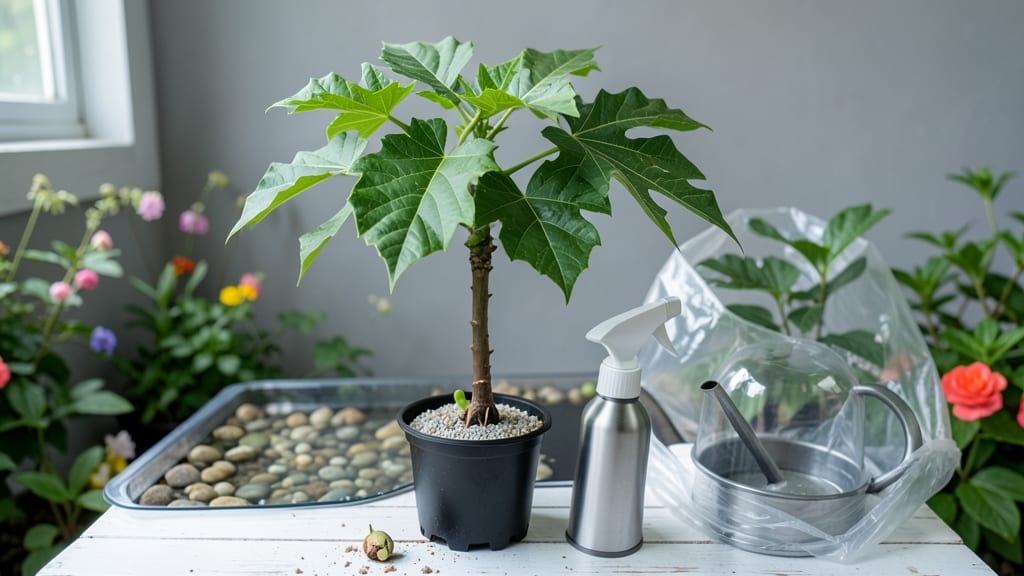
Jackfruit seed germination is your shortcut to growing this tropical giant—no nursery waitlist required. 🌱 The key is patience and the right conditions, because those hard seeds need just the right coaxing to crack open and send up their first green leaves. I've learned that rushing this process leads to rot, while giving them time and warmth pays off with sturdy seedlings ready for transplanting in just a few months.
Start with fresh seeds—stored seeds lose viability fast—and plant them 1 inch deep in a mix of equal parts peat moss and perlite. Keep the soil consistently moist but never soggy, as too much water drowns seeds before they even sprout.
A clear plastic bag over the pot creates the high humidity tropical seeds love, but don't let it stay damp longer than 2 weeks or mold will take over.
Germination takes 4-8 weeks, depending on temperature—warmer soil speeds things up, but below 75°F slows it down dramatically. When those first leaves appear, move seedlings to brighter light and start fertilizing lightly with diluted fish emulsion.
The real payoff? A thriving jackfruit tree in your yard, producing fruit in just 3-5 years—all from a seed you nurtured yourself.
Troubleshooting slow starts? Check for rot—seeds should feel firm, not mushy. If nothing happens after 3 months, they're likely done. And here's the secret: don't rush transplanting. Wait until seedlings have 4-6 leaves and a strong root system before moving them outdoors. That's when the real growth begins.
📚 In This Guide
- What you need
- Instructions
- Tips and common mistakes
- Wrapping up and next steps
What you need
- ● Fresh jackfruit seeds – 6–10 viable seeds (harvested from ripe, organic fruit; avoid store-bought seeds treated with preservatives).
- ● Well-draining potting mix – 1 small pot (4–6 inches wide) filled with a blend of: 50% coco coir or peat moss (for moisture retention)
- ● 30% perlite or vermiculite (for aeration)
- ● 20% sand or compost (to prevent compaction)
- ● Seed-starting tray or small containers – 1–2 biodegradable pots or plastic cups (3–4 inches deep) with drainage holes.
- ● Spray bottle – For gentle watering (avoid over-saturating the soil).
- ● Plastic wrap or humidity dome – To create a mini greenhouse effect.
- ○ Heating mat (optional) – For faster germination (set to 75–85°F (24–29°C)).
- ● Grow lights or sunny windowsill – Bright, indirect light (12–14 hours/day post-germination).
- ● Fertilizer (after germination) – Balanced liquid fertilizer (5-5-5 NPK) diluted to half-strength.
- ● ✅ Patience: Jackfruit seeds can take 2–4 weeks (or longer!) to sprout.
- ○ 💡 Pre-soak seeds (optional): Soak seeds in warm water for 24 hours to soften the outer shell and speed up germination.
- ● 🌡️ Temperature control: Keep the soil consistently warm—cold soil slows or halts germination.
- ● 🚫 Avoid overwatering: Let the top inch of soil dry out between waterings to prevent rot.
Step-by-step instructions for germinating jackfruit seeds
Here's how I turn those giant seeds into thriving seedlings—no fancy tools needed.
🌱 Step 1: Extract and Clean the Seeds
Start by carefully removing the seeds from the jackfruit pulp. Rinse them under cool running water to remove any remaining fruit residue. The seeds have a thick, fibrous husk that needs to be removed—this is where most beginners get stuck. Use a sharp knife to gently slice through the husk lengthwise, being careful not to damage the seed inside.
Once opened, you'll see the actual seed encased in a hard, brown shell. Soak the seeds in warm water for 24 hours to soften the shell slightly. This makes the next step easier. After soaking, scrub the seeds with a soft brush to remove any remaining pulp stuck to the shell surface. You want the shell completely clean—any leftover pulp can attract mold during germination.
💧 Step 2: Prepare for Germination
Jackfruit seeds germinate best in a warm, humid environment. Fill a small container—like a shallow tray or even a repurposed plastic food container—with a mix of 50% perlite and 50% peat moss. This combination provides both aeration and moisture retention. Moisten the mix until it's damp but not soggy—you should be able to squeeze a handful and have just a few droplets come out, not a stream.
Plant each seed about 1 inch deep in the prepared mix, spacing them 2 inches apart to allow room for root development. The seeds are large, so don't crowd them. Cover the seeds lightly with the soil mix, pressing down gently to ensure good contact. Label your container with the date—this helps track germination progress, especially since jackfruit seeds can take 2-4 weeks to sprout.
☀️ Step 3: Create Ideal Germination Conditions
Place the container in a warm spot with indirect light. Jackfruit seeds germinate best at temperatures between 75-85°F. If your home runs cooler, consider using a seedling heat mat set to 80°F to speed up the process. Cover the container loosely with plastic wrap or a humidity dome to retain moisture—this mimics the tropical conditions where jackfruit trees thrive.
Check the soil moisture every 2-3 days. The mix should stay consistently damp but never waterlogged. Overwatering at this stage can lead to rot before the seeds even sprout. If condensation forms on the plastic cover, it's a good sign—just remove the cover for 10 minutes daily to prevent mold growth. You'll know germination is underway when you see a small crack appear in the seed shell, followed by a tiny shoot emerging.
🌿 Step 4: Transplant Seedlings When Ready
Once the seedlings have developed 2-3 sets of true leaves (not the initial seed leaves), they're ready to be transplanted. This usually happens 4-6 weeks after planting, depending on your growing conditions. Choose individual pots that are at least 6 inches deep and wide—jackfruit seedlings have large root systems that need room to expand.
Fill the new pots with a well-draining potting mix and make a small hole in the center. Gently remove the seedling from its original container, being careful not to damage the roots. Place it in the new pot, ensuring the top of the root ball sits just below the soil surface. Press the soil lightly around the seedling to secure it. Water thoroughly after transplanting to help the roots settle into their new home.
⏰ Step 5: Maintain Growth for a Healthy Sapling
Keep the seedlings in bright, indirect light for the first 2 weeks after transplanting. Gradually introduce them to more direct sunlight over the next week to harden them off. Jackfruit trees love warmth and humidity, so if you're growing indoors, mist the leaves occasionally to maintain high moisture levels. Outdoor growers can move seedlings to a sheltered spot once nighttime temperatures stay above 55°F.
Fertilize lightly every 4-6 weeks with a balanced, water-soluble fertilizer diluted to half strength. Over-fertilizing at this stage can burn the delicate roots. Watch for signs of nutrient deficiency—yellowing leaves or stunted growth—and adjust as needed. With proper care, your jackfruit seedlings will grow into sturdy saplings ready for eventual outdoor planting in warmer climates.
Tips & tricks for germinating jackfruit seeds
Jackfruit seed germination doesn't have to be a guessing game—these practical tips will help you avoid common pitfalls and maximize your success rate.
Shell Prep Matters: When you soak your seeds for the required 24 hours, I recommend using lukewarm water (around 85°F) rather than boiling water. Boiling water can shock the seed and reduce germination rates. After soaking, give the shells a final scrub with a soft toothbrush—this removes microscopic pulp particles that can harbor mold spores during germination.
Soil Mix Precision: The 50% perlite/50% peat moss ratio is ideal, but if you're short on peat moss, you can substitute up to 25% with coconut coir. The key is maintaining that perfect balance between aeration (perlite) and moisture retention (peat moss). After mixing, let the soil sit for 10 minutes before planting—this allows any excess moisture to redistribute evenly, preventing waterlogged pockets around your seeds.
Germination Tracking: Since jackfruit seeds can take 2-4 weeks to sprout, I recommend marking each seed with a toothpick before planting. Write the date on the toothpick and insert it next to each seed. This visual tracking system helps you monitor progress for each individual seed without confusing them. The first sign of germination is a tiny white root breaking through the shell—this usually happens 7-10 days before the shoot emerges.
Transplant Timing: Wait until you see 2-3 sets of true leaves (not the initial seed leaves) before transplanting, which typically occurs 4-6 weeks after planting. At this stage, the seedlings have developed enough root mass to handle the transplant shock. When moving them to individual pots, water thoroughly before and after transplanting—this helps reduce stress on the delicate root systems during this critical transition period.
Pro Tips for Jackfruit Seed Germination
- Jackfruit seed germination doesn't have to be a guessing game—these practical tips will help you avoid common pitfalls and maximize your success rate.
- Shell Prep Matters: When you soak your seeds for the required 24 hours, I recommend using lukewarm water (around 85°F) rather than boiling water.
- Soil Mix Precision: The 50% perlite/50% peat moss ratio is ideal, but if you're short on peat moss, you can substitute up to 25% with coconut coir.
Frequently asked questions
How long does it take for jackfruit seeds to germinate?
Jackfruit seeds typically germinate within 10 to 30 days under ideal conditions—warmth (75–90°F), moisture, and indirect light. Soak seeds overnight before planting to speed up the process. Patience is key, as some may take longer, especially if stored improperly.
Can I germinate jackfruit seeds without soil?
Yes! Use a paper towel method for faster results: place seeds between damp towels in a sealed bag, then check daily for sprouts. Once roots appear (3–7 days), transplant into soil. This method is great for quick starts but requires close monitoring to prevent mold.
What do I do if my jackfruit seeds rot instead of sprouting?
Rotting usually means too much moisture or poor drainage. Let seeds dry slightly between waterings, and ensure pots have drainage holes. If rot occurs, remove affected seeds, sterilize containers with hydrogen peroxide, and restart with fresh seeds.
How many jackfruit seeds should I plant for the best chance of success?
Plant 3–5 seeds per pot (6+ inches deep) to increase germination odds. Thin to the strongest sprout once seedlings emerge. Jackfruit seeds have a 50–70% germination rate, so extra seeds help offset potential failures.
Can I grow jackfruit trees indoors from seeds?
While possible, jackfruit trees thrive outdoors in tropical climates. Indoors, they’ll need bright light (grow lights help), high humidity, and warm temps (70°F+). Expect slower growth and smaller fruit—ideal for container gardening as an ornamental plant.
Wrapping up and next steps
Germinating jackfruit seeds is a rewarding journey that connects you to nature’s cycle—and you’ve got all the tools to make it thrive! 🌱 Whether you’re a gardening beginner or a seasoned green thumb, patience and consistency will yield those first sprouts.
Once your seeds sprout, transplant them carefully into nutrient-rich soil to watch them grow into a tropical treasure.
Ready to take the next step? Start small—try 3-5 seeds to refine your technique, then scale up! Share your progress with fellow plant enthusiasts or even experiment with growing jackfruit in containers. Happy planting—your future harvest awaits! 🌿✨