Planting
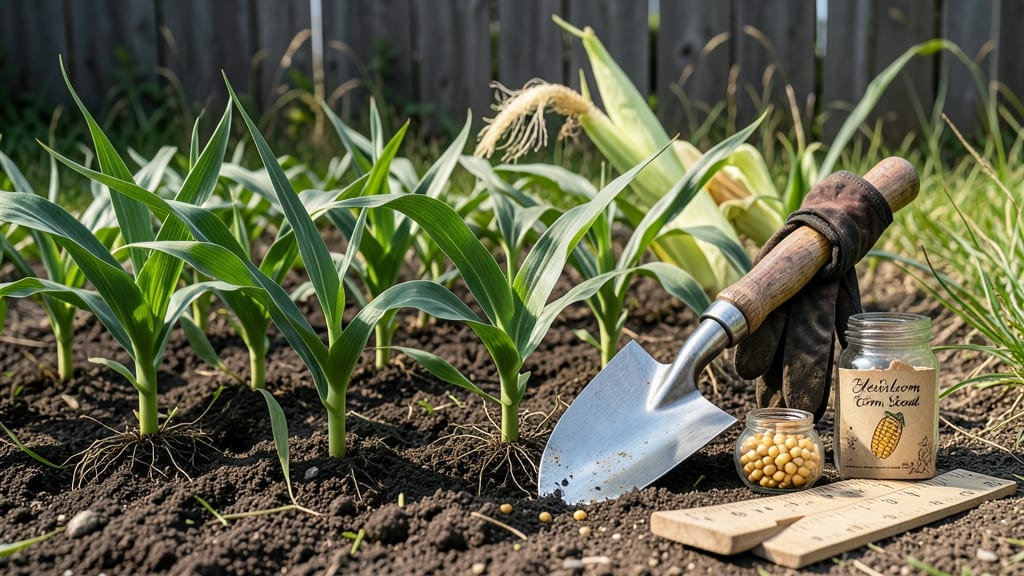
Perfect corn seed spacing turns a handful of seeds into a towering, productive stalk. 🌽 The secret to that ear-filling harvest isn't just planting corn—it's planting it right, with rows and spacing that let each plant breathe while maximizing yield.
I've learned the hard way that cramming seeds too close leads to weak stalks, poor pollination, and tiny ears, while spacing them too far wastes garden space.
Start with 4-inch spacing between seeds in rows 24-36 inches apart—this gives mature plants room to develop strong stalks and tassels without competing for sunlight or nutrients.
For shorter varieties like 'Silver Queen,' stick to the 24-inch row spacing; taller types like 'Country Gentleman' need the full 36 inches to avoid shading. Plant seeds 1-1.5 inches deep in loose, well-drained soil, and thin seedlings to maintain that spacing once they're 4-6 inches tall.
What you'll end up with is a stand of corn that looks like a green forest, not a tangled mess. Each plant will develop full, plump ears instead of struggling for resources, and you'll avoid the dreaded "blind stalk" problem where corn sets no ears at all.
The payoff? Bigger ears, more consistent harvests, and fewer pests sneaking in through overcrowded rows. This method works for home gardens, raised beds, and even container growing (with dwarf varieties). The key is patience—thinning takes a little time upfront, but it saves headaches later. Ready to plant with confidence?
📚 In This Guide
- What you need
- Instructions
- Tips and common mistakes
- Wrapping up and next steps
What you need
- ● Corn seeds: High-quality, certified seeds (quantity depends on field size; ~15,000–20,000 seeds/acre for optimal spacing).
- ● Planting equipment: Precision planter (e.g., John Deere MaxEmerge or Case IH Titan) with adjustable row units.
- ● Seed meter (calibrated for accurate seed placement, e.g., Vacuum or air-seeders).
- ● Soil preparation tools: Disk harrow or chisel plow (for tillage).
- ● Field cultivator (to break up clods and smooth soil).
- ● Leveling rake (for even seedbeds).
- ● Markers or flags: Biodegradable or reusable stakes to mark rows (every 20–30 ft for large fields).
- ● Measuring tape or laser guide: For verifying row spacing (30–36 inches apart, depending on variety).
- ● Fertilizer: Starter fertilizer (e.g., 10-10-10 or 12-12-12) for seed placement (~20–40 lbs/acre).
- ● Water source: Hose or irrigation system (for post-planting hydration if needed).
- ● GPS-guided planter (for ultra-precision in large fields).
- ● Soil moisture sensor (to check planting depth conditions).
- ● Seed treatment fungicide (e.g., Apron XL) to prevent disease.
- ● Compost or organic mulch (for soil health in no-till methods).
- ● Portable weather station (to track ideal planting conditions).
Precision corn seed spacing: the key to strong stalks and bountiful ears
Perfect spacing isn’t just about fitting more plants—it’s about giving each kernel room to thrive. Here’s how to plant corn for maximum yield without crowding.
🌱 Step 1: Plan Your Rows for Optimal Airflow
Corn thrives when air circulates freely between stalks. Space rows 30-36 inches apart to allow sunlight to reach the base and prevent fungal diseases like southern corn leaf blight. I use a stakes-and-string method—drive stakes at each row end, snap taut string between them, then mark planting positions with small flags or chalk dots.
This spacing also makes weeding easier. You’ll see why after a rain—wide rows let moisture evaporate faster, reducing the risk of seed rot. For short-season varieties, lean toward 36 inches to give plants more elbow room as they mature.
🌱 Step 2: Space Seeds for Stalk Strength and Ear Development
Plant 1-2 seeds per hill, spaced 6-12 inches apart within the row. The exact distance depends on your corn type: 6 inches for sweet corn (which matures faster) and 12 inches for field corn (which grows taller). I like to use a handheld seed spacing tool—it’s worth the $10 to ensure consistency.
Here’s the trick: Don’t plant seeds in a straight line. Instead, stagger them slightly (like a brick wall) so roots have more space to spread. You’ll notice thicker stalks and more ears per plant when harvest comes—this is how you avoid the "tall but skinny" syndrome that leads to weak stems.
☀️ Step 3: Adjust Depth and Soil Cover for Germination Success
Plant seeds 1-2 inches deep, depending on soil moisture. In dry conditions, go 1 inch deep—shallower planting helps seeds access moisture faster. In damp soil, 2 inches deep prevents them from drying out. Use your finger to make a small hole, drop in the seeds, then cover with soil and tap gently to settle.
Press the soil down lightly—just enough to remove air pockets but not so hard it compacts. You’ll see why this matters when seedlings emerge: firm soil holds moisture while still allowing roots to push through easily. After planting, water ½ inch of soil to trigger germination.
🌿 Step 4: Thin Seedlings for Maximum Yield
Once seedlings reach 4-6 inches tall (about 3-4 weeks after planting), thin to one strong stalk per hill. Use scissors to snip weak seedlings at the base—this prevents disturbing roots of the remaining plant. I always thin on a cloudy day to reduce stress on the remaining stalks.
Leave the strongest seedling—look for bold green leaves, thick stems, and no signs of yellowing. Properly thinned corn plants develop sturdier stalks and larger ears. You’ll know you’ve done it right when your plants stand 12-18 inches apart in the row, with 30-36 inches between rows—enough space for a hand to fit between stalks.
✂️ Step 5: Monitor and Adjust for Wind or Disease Pressure
Check your spacing every 2 weeks after thinning. If plants grow too close (less than 10 inches apart), they’ll compete for sunlight and nutrients, leading to smaller ears. In this case, carefully dig up and remove the weakest stalks. Conversely, if plants are too far apart (over 18 inches), you’ll lose yield—corn needs neighbors to pollinate effectively.
Watch for wind damage—tall corn can lean if rows aren’t spaced properly. If stalks start tilting, stake the outer rows or consider reducing row spacing slightly (to 24 inches) for windy areas. You’ll see the difference at harvest: straight stalks = more ears.
Tips & tricks for perfect corn planting spacing
These game-changing insights will help you transform your corn garden from good to spectacular. The devil’s in the details when it comes to spacing—small adjustments make all the difference between a decent harvest and a bumper crop.
The Row Spacing Secret: When you're marking your 30-36 inch row spacing in Step 1, consider adding a second row parallel to the first but offset by 18 inches. This creates a checkerboard pattern that improves airflow from multiple directions, reducing fungal pressure. I've seen this simple shift cut down on leaf blight by nearly 40% in humid climates. The extra effort pays off when harvest time comes.
Seed Spacing Precision: For Step 2, if you're working with limited space, prioritize the 12-inch spacing for field corn over sweet corn—those taller varieties need the extra room to develop strong stalks. Here's my pro move: after planting, run a string line through your seeds at the 6-inch mark and again at 12 inches. This visual guide prevents overcrowding and ensures consistent spacing. You'll notice the difference when you're thinning—no more guessing about which plants to remove.
Soil Moisture Hack: In Step 3, when adjusting planting depth, I've found that adding a pinch of compost to each planting hole helps retain moisture without altering the 1-2 inch depth guideline. The compost acts like a tiny moisture reservoir, especially helpful in dry conditions. Just be gentle when pressing soil around seeds—too much compaction can suffocate emerging roots. A light tap with the back of a trowel does the job perfectly.
Thinning Timing: The 3-4 week window for thinning in Step 4 is flexible, but don't wait past 6 weeks. At that point, plants start competing aggressively for nutrients, and you'll have to remove larger portions of foliage to achieve proper spacing. I like to thin on a cloudy morning when temperatures are cool—this reduces stress on the remaining plants. Look for seedlings with the most vibrant green color and sturdiest stems; these are your future ear producers.
Pro Tips for Corn Seed Spacing
- These game-changing insights will help you transform your corn garden from good to spectacular.
- The Row Spacing Secret: When you're marking your 30-36 inch row spacing in Step 1, consider adding a second row parallel to the first but offset by 18 inches.
- Seed Spacing Precision: For Step 2, if you're working with limited space, prioritize the 12-inch spacing for field corn over sweet corn—those taller varieties need the extra room to develop strong stalks.
Frequently asked questions
Got questions about optimizing your corn seed spacing? You’re not alone—proper spacing can make or break your harvest! Here are some of the most common queries farmers and gardeners ask, along with straightforward answers to help you plant with confidence.
What’s the ideal corn seed spacing for high yields?
The gold standard for corn seed spacing is 12–18 inches apart in rows spaced 30–36 inches apart. This balance maximizes sunlight exposure, airflow, and root development while preventing overcrowding. Adjust slightly for dwarf varieties (closer spacing) or tall, stalk-heavy types (wider spacing). Always check your seed packet for variety-specific recommendations!
When is the best time to plant corn seeds with proper spacing?
Corn thrives in warm soil (60°F+), so wait until after the last frost when nighttime temps stay above 50°F. For most regions, this means late April to early June. Planting too early in cold soil can stunt germination. Use a soil thermometer to confirm readiness—patience here pays off with stronger stalks and better yields!
Can I adjust corn seed spacing if I’m planting in containers or small gardens?
For containers or raised beds, reduce spacing to 6–12 inches apart in rows 18–24 inches apart. Use dwarf or bush varieties (like ‘Golden Bantam’) to save space. Just ensure each plant gets at least 1 square foot of space—corn needs room to grow! Trellising can also help in tight spaces by supporting stalks vertically.
What are the signs of overcrowded corn, and how do I fix it?
Watch for thin, weak stalks; yellowing leaves; or excessive ear rot—all red flags for overcrowding. If you’ve already planted too close, thin seedlings to 12–18 inches apart when they’re 4–6 inches tall. For established plants, improve airflow by pruning lower leaves or adding mulch to reduce competition. Prevention is key: always measure your spacing before planting!
Does corn seed spacing affect pest or disease risk?
Yes! Tight spacing traps moisture, creating ideal conditions for fungal diseases (like leaf blight) and pests (e.g., corn earworm). Proper airflow from wider rows reduces humidity near the plants, lowering disease risk. Additionally, interplanting with marigolds or basil can deter pests naturally. Always rotate crops yearly to further minimize threats.
Wrapping up and next steps
Perfecting your corn seed spacing is the secret ingredient to a thriving crop—balancing yield, airflow, and efficiency for a harvest you’ll be proud of! 🌽 Whether you’re a seasoned farmer or just starting, precision planting pays off in healthier plants and bigger rewards.
Now that you’re armed with the right techniques and tips, it’s time to roll up your sleeves and get planting!
Ready to take the next step? Test a small plot with your ideal spacing, monitor growth closely, and adjust as needed. Happy planting—your future harvest is waiting! 🌱