
Lawn
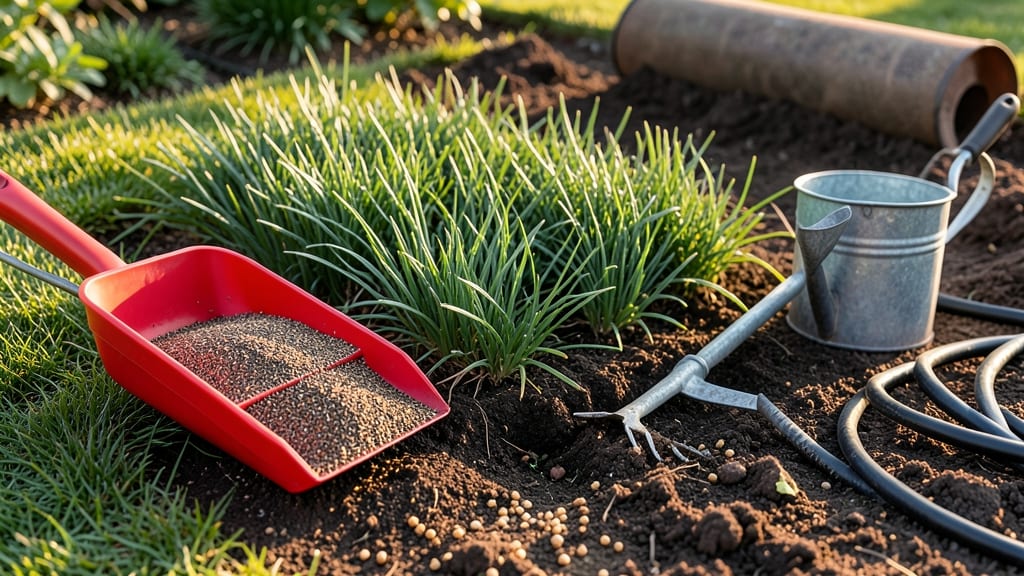
Seed a new lawn in fall—it’s the secret weapon for establishing a lawn that outlasts weeds and drought. 🌱 I’ve seeded lawns in every season, but autumn’s cooler temps and steady rain create the perfect conditions for grass roots to take hold—without fighting summer heat or winter frost. The key? Start when soil temps hit 60-70°F (typically late August to October in most zones) and choose cool-season grasses like tall fescue or Kentucky bluegrass. These varieties thrive when days grow shorter, sending roots deep before winter sets in. You’ll end up with a dense, weed-resistant lawn by spring—no patchy spots or repeated reseeding. The secret’s in the prep: loosen soil, level high spots, and keep moisture consistent until germination (usually 10-20 days). Works in zones 3-8, even for beginners. Here’s how to nail every step—no guesswork, just results.
📚 In This Guide
- What you need
- Instructions
- Tips and common mistakes
- Wrapping up and next steps
What you need
- ● Seed: Choose cool-season grass seed (e.g., Kentucky bluegrass, tall fescue, or fine fescue). Aim for 5–10 lbs per 1,000 sq ft, depending on grass type and soil quality.
- ● Topsoil or compost: ¼–½ inch of high-quality topsoil or compost to improve soil texture and nutrients.
- ● Lawn starter fertilizer: A slow-release blend with high phosphorus (P) (e.g., 10-20-10 ratio) to encourage root growth. Apply ½ lb per 100 sq ft.
- ● Rake: A stiff-bristle bow rake (for leveling) and a hand rake (for spreading seed).
- ● Broadcast spreader: For even seed distribution (manual or drop-type).
- ● Water source: A hose with a sprinkler head or garden hose nozzle (fine mist setting).
- ○ Soil test kit (optional but recommended): Test pH (ideal: 6.0–7.0) and adjust with lime or sulfur if needed.
- ● Seed germination blanket: Burlap or biodegradable erosion control fabric to protect seed from birds and erosion (remove after germination).
- ● Lawn roller: Lightweight (30–50 lbs) to ensure good seed-to-soil contact.
- ● Pre-emergent herbicide: Apply after germination to block weeds (follow label rates).
- ● Soil conditioners: Vermiculite or peat moss to improve drainage in heavy clay soils.
- ● Gloves & knee pads: For comfort during prep work!
Step-by-Step instructions for establishing a fall-laid lawn
Fall is the perfect time to grow a thick, weed-resistant lawn—here’s how to do it right.
🪴 Step 1: Prepare the Soil for Optimal Seed Contact
Start by removing all existing vegetation, rocks, and debris from the area. A rented sod cutter or rototiller makes this easier, but you can also use a shovel for smaller spaces. The goal is bare, level soil with no obstructions—seeds need direct contact with the earth to germinate properly.
Test the soil pH using a kit from your local garden center. Cool-season grasses thrive in a range of 6.0 to 7.0. If your soil tests lower, apply lime as directed on the package to raise the pH before seeding. For compacted or clay-heavy soil, work in 2-3 inches of compost to improve drainage and aeration. Rake the area smooth afterward—any ridges or low spots will create uneven growth.
🌱 Step 2: Choose and Spread Seed Evenly
Select a high-quality cool-season grass blend suited to your climate (e.g., tall fescue, Kentucky bluegrass, or perennial ryegrass). Avoid cheap seed mixes—they often contain fillers that produce weak grass or weeds. For a 2,500 sq. ft. lawn, you’ll need about 5-7 pounds of seed (check the package rate).
Use a broadcast spreader for large areas or a hand spreader for smaller sections. Walk in a crisscross pattern to ensure even coverage—missed spots will leave thin patches. Lightly rake the area after spreading to press seeds into the soil without burying them. The seed should sit ¼ inch deep at most; deeper planting slows germination.
💧 Step 3: Water Consistently for Germination
Keep the soil moist but not soggy for the first 2-3 weeks—this is critical for seedling establishment. Water lightly twice daily (morning and evening) to prevent the top layer from drying out. You’ll know you’re doing it right if the soil feels damp 1 inch down but doesn’t puddle. Avoid overhead sprinklers that can dislodge seeds.
Once the grass reaches 2-3 inches tall, reduce watering to 1 inch per week, including rainfall. This encourages deeper root growth, which is essential for drought resistance. If the lawn starts to yellow or wilt, it’s a sign you’re either overwatering or underwatering—adjust based on soil moisture.
✂️ Step 4: Maintain and Strengthen the New Lawn
Wait until the grass reaches 3-4 inches tall before your first mow. Set the mower blade to 3 inches—taller grass shades out weeds and develops deeper roots. Never remove more than one-third of the blade height at a time; aggressive cutting stresses young grass. Bag the clippings initially to avoid smothering the seedlings.
Apply a starter fertilizer with low nitrogen (5-10-10 ratio) after the first mowing to support root development. Avoid high-nitrogen fertilizers early on—they promote top growth at the expense of roots. In late fall, apply a winterizer fertilizer (high in potassium) to harden off the grass before dormancy. This step is non-negotiable for long-term resilience.
⏰ Step 5: Plan for Long-Term Health
After the first growing season, overseed bare or thin spots in early fall to maintain density. Aerate the lawn annually in late summer or early fall to relieve compaction and improve nutrient uptake. Core aeration (removing small soil plugs) works best—it’s more thorough than spike aeration.
Fall is also the ideal time to control weeds proactively. Apply a pre-emergent herbicide in late summer (before weed seeds germinate) to prevent crabgrass and other annuals. For existing weeds, spot-treat with a selective herbicide labeled for lawns, but avoid broad-spectrum products that kill grass too. A thick, healthy lawn crowds out weeds naturally over time.
Tips & tricks for perfect fall lawn establishment
Here’s what nobody tells you about getting that lush fall lawn right—these are the details that separate a decent lawn from one that truly thrives.
Soil Prep Secret: Don’t just remove debris—break up any compacted soil in Step 1 with a garden fork or aerator. Compacted soil creates air pockets that prevent roots from establishing properly. I’ve seen lawns fail because the soil was too dense; a quick forking session makes all the difference. For heavy clay soils, work in that 2-3 inches of compost right after aerating to improve structure immediately.
Seed Selection Matters: In Step 2, avoid bargain seed blends that contain ryegrass fillers—it grows fast but weakens over time. Instead, invest in a premium blend with at least 50% tall fescue for density and durability. For shady areas, look for blends specifically labeled for low-light conditions. The extra cost upfront saves headaches later when you’re patching thin spots.
Watering Precision: Those critical 2-3 weeks in Step 3 require consistency. I use a rain gauge to track moisture—aim for 0.25 inches per watering session (twice daily). If you’re unsure, dig a small hole after watering; the soil should be damp 1 inch down but not wet. Overwatering drowns seeds, while underwatering causes uneven germination. A soaker hose works better than sprinklers for this delicate stage.
Mowing Technique: When your grass hits 3-4 inches in Step 4, adjust your mower blade to 3 inches and never cut more than one-third of the blade height at once. I’ve seen homeowners scalp their lawns and create stress that invites weeds. Let those clippings stay on the lawn—they return nutrients to the soil naturally, reducing the need for fertilizer over time.
Pro Tips for Seed New Lawn In Fall
- Here’s what nobody tells you about getting that lush fall lawn right—these are the details that separate a decent law...
- Soil Prep Secret: Don’t just remove debris—break up any compacted soil in Step 1 with a garden fork or aerator. Compa...
- Seed Selection Matters: In Step 2, avoid bargain seed blends that contain ryegrass fillers—it grows fast but weakens ...
Frequently asked questions
Got questions about seeding a new lawn in the fall? You’re not alone! Here are answers to the most common concerns—so you can tackle your project with confidence.
Why is fall the best time to seed a new lawn?
Fall offers perfect conditions for cool-season grasses: mild temps, fewer weeds, and steady rainfall. Seeds germinate easily, and young roots establish deep before winter—giving you a lush, resilient lawn come spring.
How long does it take for grass seed to grow in fall?
Most cool-season grasses sprout in 7–21 days, depending on variety and weather. Full maturity (ready for foot traffic) takes 3–4 weeks. Water consistently to speed up growth—just avoid over-saturating the soil.
Can I seed over an existing lawn, or do I need to start fresh?
If your old lawn is thin or patchy, seeding over it can work—but only if weeds are minimal. For best results, kill existing grass with glyphosate (follow label instructions) or remove it manually before seeding. A clean slate = fewer weeds later!
Is fall seeding cheaper than spring? What’s the catch?
Fall seeding is often more cost-effective because:
- Lower demand = better deals on seed and tools.
- Fewer pests (like chinch bugs) compared to summer.
- Less watering needed than in hot months.
How do I keep weeds out of my new fall lawn?
Prevent weeds with these steps:
- Pre-emergent herbicide (applied after seeding but before weeds sprout).
- Use high-quality seed with built-in weed suppression.
- Mow high (3–4 inches) once grass reaches 3–4 inches to shade soil.
- Water deeply 2–3 times/week to outcompete weeds.
Wrapping up and next steps
Fall is your golden opportunity to grow a lush, resilient lawn—one that outsmarts weeds and thrives year-round! By seeding in cool weather, you’re giving grass roots the perfect chance to establish deep, strong networks before winter. Don’t wait—your future lawn is counting on you!
Ready to take action? Grab your supplies, follow the steps, and start seeding this weekend. Your yard (and future barbecues) will thank you! 🌱✨