
Propagation
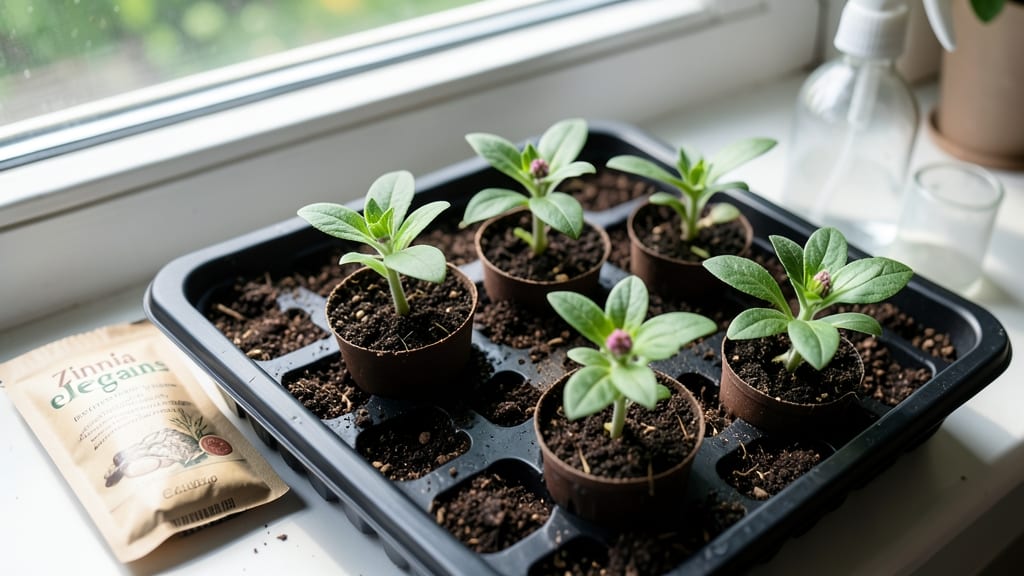
Growing zinnias from seed indoors guarantees fast blooms in just 60 days—no more waiting for store-bought seedlings that may already be stressed. 🌱 I’ve started dozens of batches, and the secret isn’t complicated: timing, warmth, and the right light.
Skip the guesswork with this straightforward method that works even for beginners.
You’ll need a few simple supplies: biodegradable pots (or recycled containers), a seed-starting mix, a heat mat or warm spot, and a grow light or sunny windowsill. Zinnias love warmth—aim for 70-75°F—and they sprout quickly, often within 5-7 days.
The key is keeping them moist but not soggy to avoid damping off, a common seedling killer.
By day 45, you’ll be pinching back leggy seedlings to encourage bushier growth, and by day 60, those vibrant blooms will be ready for transplanting. The payoff? Bold, long-lasting flowers that attract pollinators and last all summer with minimal care.
Hardening off takes just a week, and your garden will thank you for the early start.
This method works for any variety—dwarf, giant, or lacy zinnias—and adapts to small spaces or balconies. Whether you’re a first-timer or a seasoned grower, indoor starting gives you control over the process. Let’s get those seeds sprouting!
📚 In This Guide
- What you need
- Instructions
- Tips and common mistakes
- Wrapping up and next steps
What you need
- ● Zinnia seeds – Choose heirloom or hybrid varieties (e.g., Benary’s Giant, Profusion, or Zahara). Aim for 3–5 seeds per 2–3 inch pot or 10–15 seeds per tray (if sowing in bulk).
- ● Seed-starting mix – A lightweight, sterile potting mix (avoid garden soil). A 10–12 quart bag is ideal for 6–12 seedlings.
- ● Containers – Cell trays (72-cell or 128-cell) for individual seedlings.
- ● Small pots (2–3 inches deep) if not using trays.
- ○ Clear plastic domes or humidity trays (optional but helpful for moisture retention).
- ● Grow lights or sunny windowsill – Zinnias need 12–16 hours of light daily. A T5 LED grow light (12–24 inches from seedlings) works best.
- ● Spray bottle – For gentle watering to avoid disturbing seeds.
- ● Plant labels & markers – To track varieties (e.g., wooden labels or a fine-tip marker).
- ○ Heat mat (optional) – Speeds up germination (set to 70–75°F).
- ● Fertilizer – A balanced liquid fertilizer (5-5-5 or 10-10-10) diluted to half-strength for seedlings.
- ● Scissors or knife – For pricking out seedlings when transplanting.
- ○ Thermometer (optional) – To monitor soil and air temps (65–75°F is ideal).
- ● Timing – Start seeds 6–8 weeks before your last frost date (zinnias bloom in 60–70 days from seed!).
- ● Space – A dedicated area for seedlings (e.g., sunny windowsill or grow tent).
- ● Patience – Germination takes 7–14 days (keep soil moist but not soggy!).
Step-by-step instructions for growing zinnias from seed indoors
Here's my foolproof method for getting vibrant zinnias blooming in just 60 days—no waiting around.
🌱 Step 1: Start Seeds in Warm, Moist Soil
Zinnias germinate best in 75-85°F soil, so I use a seedling heat mat under my trays. Fill 4-inch pots (one per seed) with sterile seed-starting mix—never garden soil, which can harbor fungal diseases. Moisten the mix until it's damp like a wrung-out sponge, then press it down gently to remove air pockets.
Drop 1-2 seeds per pot about ¼ inch deep—that's roughly the width of a dime. Cover them lightly with more mix, then mist the surface until evenly damp. I like to use a spray bottle because it prevents seeds from washing away. Place the pots in a clear plastic bag to trap warmth and humidity, but leave it slightly open for airflow.
💧 Step 2: Maintain Consistent Moisture and Light
Keep the soil consistently moist but never soggy—zinnias hate wet feet. Check daily and water from the bottom if needed, letting the pots sit in ½ inch of water for 10 minutes. Once seedlings emerge (usually 5-10 days), remove the plastic bag immediately to prevent damping-off.
Move them under grow lights right away—zinnias need 14-16 hours of light daily. I use a full-spectrum LED about 2-3 inches above the seedlings and raise it as they grow. Without enough light, they'll stretch leggy, and those weak stems won't support heavy blooms later.
☀️ Step 3: Harden Off and Transplant Quickly
After 2-3 weeks, when seedlings have 2-3 true leaves, start hardening them off. Place them outside in a shaded, sheltered spot for 1 hour the first day, then gradually increase time over 7-10 days. Watch for wilting or yellowing—if you see that, they're not ready yet.
Transplant outdoors 2-3 weeks before your last frost date when nighttime temps stay above 50°F. Choose a sunny spot (zinnias need 6+ hours of direct sun) and dig holes twice as wide as the root ball. Space them 12-18 inches apart—crowding leads to weak stems and fewer blooms.
✂️ Step 4: Prune for Bushier Growth and Continuous Blooms
Pinch back the top set of leaves when seedlings are 4-6 inches tall to encourage bushier growth. This might seem counterintuitive, but it forces energy into side branches, leading to more flowers. Deadhead spent blooms regularly—snip them back to the next set of leaves to prevent seed formation and encourage nonstop flowering.
Fertilize lightly every 2-3 weeks with a balanced 10-10-10 formula, but avoid overdoing it—zinnias are heavy feeders but bloom best when slightly underfed. Mulch around the base with 1-2 inches of straw to retain moisture and suppress weeds, which compete for nutrients.
🌿 Step 5: Extend the Season with Simple Care
Zinnias thrive in warm weather but bolt quickly when temps drop below 50°F. In cooler climates, start a second batch indoors 8 weeks before fall's first frost to enjoy late-season color. Cut back faded stems to the first set of leaves, and you'll often get a second flush of blooms.
Watch for powdery mildew in humid conditions—space plants properly and water at the base to keep foliage dry. If you see white powder on leaves, treat immediately with neem oil or a baking soda spray. With these steps, you'll have bold, long-lasting blooms from early summer until frost.
Tips & tricks for growing vibrant zinnias indoors
These game-changing strategies will help you skip the common pitfalls and get those bold blooms faster than ever.
Germination Secret: The 75-85°F soil temperature range is non-negotiable for zinnias—any cooler and germination slows dramatically. I've found that placing your seedling heat mat on top of a small tray filled with warm water creates a steam bath effect that maintains perfect conditions. Pro tip: Use a small thermometer to monitor soil temp daily, especially if your home runs cool. The moment your seeds sprout (usually 5-10 days), remove the plastic bag immediately to prevent damping-off—a fungal disease that turns seedlings to mush overnight.
Lighting Strategy: Zinnias need 14-16 hours of light daily, but here's what nobody tells you: The 2-3 inch distance from grow lights is just a starting point. As your seedlings grow, raise the lights incrementally—about 1 inch per week—to prevent light burn. I use a simple ruler taped to my light stand to track progress. If you notice seedlings stretching toward the light (called etiolation), they're begging for more intensity. In this case, lower the lights by 1 inch immediately and increase duration to 16 hours until they perk up.
Transplant Timing: The 2-3 weeks before last frost window is your sweet spot, but timing is everything. I check my local frost dates and then count backward, adding 2 extra weeks as a buffer. For example, if your last frost is May 15, aim for April 1. Hardening off is where most people fail—don't rush it! Start with just 1 hour in shade on day one, then increase by 30 minutes daily. Watch for wilting or yellowing leaves like a hawk; these are your early warning signs that the plant isn't ready for more sun exposure.
Season Extension Hack: That 8-week second batch for fall color is your secret weapon for year-round zinnias. Here's the trick: Start your second batch 12 weeks before your first expected frost date, not 8. This gives you a full 4-week buffer for unpredictable weather. I've used this method in Zone 5 and still enjoyed blooms until Thanksgiving! When cutting back faded stems, always snip to the first set of leaves—never below it. This prevents unsightly bare stems and encourages new growth from the base.
Pro Tips for Zinnias From Seed Indoors
- These game-changing strategies will help you skip the common pitfalls and get those bold blooms faster than ever.
- Germination Secret: The 75-85°F soil temperature range is non-negotiable for zinnias—any cooler and germination slows...
- Lighting Strategy: Zinnias need 14-16 hours of light daily, but here's what nobody tells you: The 2-3 inch distance f...
Frequently asked questions
Got questions about growing zinnias from seed indoors? You’re not alone—here are the answers to the most common ones!
When is the best time to start zinnia seeds indoors?
Start seeds 6–8 weeks before your last frost date for outdoor planting. Zinnias thrive in warm soil, so avoid early starts—they’ll bolt or stretch. A general rule: Mid-March to early April works for most U.S. climates. Check your local frost dates for precision!
Can I grow zinnias indoors all year round?
Technically yes, but they’re sun-loving annuals that need 12+ hours of bright light daily. Without a grow light, they’ll grow leggy and weak. If you’re determined, supplement with LED grow bulbs and keep temps above 60°F (15°C). Otherwise, enjoy them as short-term houseplants or transition to containers outdoors!
Why are my zinnia seedlings dying or not germinating?
Common culprits: overwatering (seeds rot), cold soil (below 60°F/15°C), or old seeds (viability drops after 1–2 years). Try these fixes:
- Use a seed-starting mix (not garden soil) for drainage.
- Keep humidity high with a clear plastic dome or spray bottle.
- Test seeds with a paper towel germination trick if unsure.
Do zinnias need pruning when grown indoors?
Yes! Pinch off the top set of leaves when seedlings are 4–6 inches tall to encourage bushier growth. Later, deadhead spent blooms to prolong flowering. Avoid heavy pruning—zinnias are delicate and may not recover well. Use clean scissors to snip just above a leaf node.
Are there low-maintenance zinnia varieties for beginners?
Try these foolproof picks:
- ‘Thumbelina’ (dwarf, 6–12” tall, great for containers).
- ‘Benary’s Giant’ (classic, disease-resistant, 36” tall).
- ‘Crystal’ series (compact, colorful, and heat-tolerant).
These varieties germinate easily and bloom prolifically with basic care. Start with ‘Thumbelina’ if space is limited!
Wrapping up and next steps
Growing zinnias from seed indoors is a rewarding journey that delivers vibrant blooms in just 60 days—no gardening experience required! With the right setup, patience, and a little care, you’ll enjoy a burst of color that brightens up any space.
Whether you’re a beginner or a seasoned plant parent, these cheerful flowers prove that big results come from small seeds.
Ready to take the next step? Once your seedlings are thriving, transplant them outdoors after the last frost for a full-season display. Happy growing—your garden (and pollinators!) will thank you! 🌸