
Planting
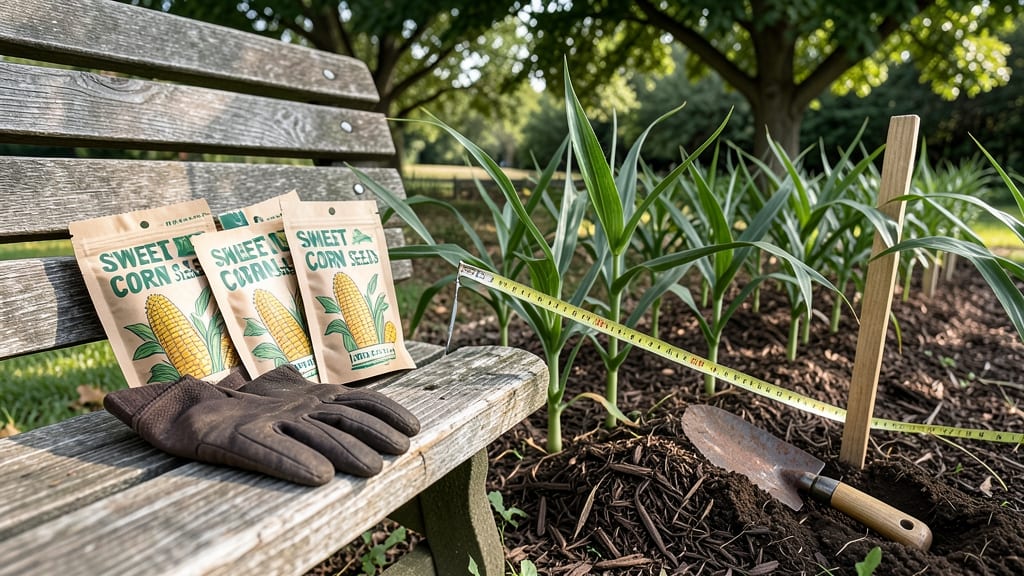
Getting sweet corn seed spacing right is everything—plant too close, and you’ll end up with tiny ears and fierce competition. 3-4 inches apart in rows spaced 24-36 inches apart is the sweet spot for maximum yield. 🌽 I learned the hard way when my overcrowded patch produced shrunken ears instead of plump, juicy ones.
The right spacing ensures every plant gets sunlight, water, and nutrients without fighting its neighbors for survival.
Your soil type and corn variety play a bigger role than most gardeners realize. Sandy soil needs slightly wider spacing (up to 36 inches between rows) to prevent drought stress, while clay holds moisture better, allowing tighter rows (24 inches).
For bush corn (shorter varieties), you can plant seeds 2 inches apart in 18-inch rows, but succession corn (taller types) needs the full 3-4 inch spacing to support those heavy ears.
By mid-summer, you’ll see plants reaching 6-8 feet tall with strong stalks and multiple ears per plant—proof you’ve given them room to thrive. The payoff? Double the harvest compared to crowded patches, with corn that’s sweet, tender, and ready to pick in just 60-75 days from planting.
Even beginners can nail this with a simple string-and-stakes layout for straight rows.
If you’re short on space, try block planting (planting seeds in a square instead of rows) to maximize pollination and yield. Just mark your grid with stakes and string—no fancy tools needed.
And remember: thin seedlings when they’re 3-4 inches tall to avoid overcrowding later. The effort now saves headaches (and lost harvests) down the road.
📚 In This Guide
- What you need
- Instructions
- Tips and common mistakes
- Wrapping up and next steps
What you need
- ● Sweet corn seeds – Choose a high-quality, disease-resistant variety (e.g., Silver Queen or Peaches & Cream). Aim for 1–2 lbs per 100 ft of row, depending on spacing.
- ● Garden soil – Well-draining, fertile soil with a pH of 6.0–7.0. Add compost or aged manure if needed.
- ○ Planting markers or stakes – Small flags or sticks to mark rows and spacing (optional but helpful for precision!).
- ● Garden hose or watering can – For consistent moisture during germination.
- ○ String & stakes (optional) – To create straight rows for even spacing.
- ● Fertilizer (balanced or corn-specific) – Look for a 10-10-10 or 5-10-10 NPK ratio (apply pre-planting and at tasseling stage).
- ● Row cover or mulch – Protects young seedlings from pests and retains moisture.
- ● Hand trowel or transplanting tool – For precise seed placement (especially if direct-sowing).
- ● Seedling heat mat (for early starts) – Speeds up germination in cooler climates.
- ● Organic pest control (e.g., neem oil) – Prevents corn earworm and aphid issues.
Sweet corn seed spacing: how to arrange plants for maximum yield
Here's the proven spacing system I use to grow sweet corn that fills the cob and produces bushels of ears.
🌱 Step 1: Plan Your Rows and Planting Schedule
Sweet corn thrives when planted in blocks rather than single rows—this ensures wind pollination and prevents poor ear development. For a 4-row block, space rows 30-36 inches apart to allow harvesters or cultivators to pass between them. I always plant 2-3 varieties with different maturity dates to extend harvest time.
Start seeds indoors 2-3 weeks before your last frost date, then transplant seedlings when soil reaches 60°F. The key is planting in staggered blocks—if you have space, create a second block 10-14 days later for continuous harvest. This prevents all plants from reaching maturity at once, which is critical for home gardeners.
🌱 Step 2: Space Seeds Correctly in the Row
Plant seeds 1 inch deep and space them 4-6 inches apart within the row. This gives roots room to establish without crowding, which is especially important for sweet corn varieties that develop large stalks. I use a seed spacing tool or my fingers to mark consistent intervals—uneven spacing leads to uneven maturity and makes harvesting a nightmare.
Thin seedlings to 6-8 inches apart when they reach 6 inches tall. You'll know it's time when the first true leaves appear—this is the moment to remove weaker plants. Never let seedlings compete for nutrients; crowded corn produces small, underdeveloped ears. If you planted two seeds per hole, snip the weaker one at soil level with clean scissors.
☀️ Step 3: Monitor Plant Development and Adjust Spacing
Watch for tasseling—when the top of the plant develops a feathery pollen-bearing structure. This usually happens 60-70 days after planting, depending on variety. At this stage, check your spacing: plants should have 12-18 inch stems with 6-8 leaves. If they're too close, you'll see leaves brushing against neighbors, which spreads disease and reduces air circulation.
If you notice plants leaning toward each other, it's a sign of overcrowding. Gently pull or cut the weakest stalks at the base—never yank them, as this damages roots. The goal is 1 plant per foot in the row by maturity. This spacing ensures each ear has enough energy to develop fully, resulting in plump, well-filled cobs rather than skinny, underdeveloped ones.
💧 Step 4: Maintain Spacing Through the Growing Season
Sweet corn needs 1-1.5 inches of water per week, delivered at the soil level to avoid wetting leaves (which spreads fungal diseases). Use a soaker hose to keep moisture consistent—uneven watering causes uneven growth, and you'll see some plants outpace others, breaking your spacing uniformity.
Side-dress with compost or balanced fertilizer when plants reach 12 inches tall to support stalk and ear development. Avoid high-nitrogen fertilizers late in the season—they promote leafy growth at the expense of ear production. If you notice plants growing too tall too quickly, reduce water slightly and increase shade to slow stem elongation.
✂️ Step 5: Harvest at Peak Maturity for Best Flavor
Harvest when silks turn brown and dry and kernels are milky white when pierced with a fingernail. This usually occurs 20-25 days after tasseling. If you wait too long, kernels turn starchy and yellow, and the ear becomes tough. I always harvest in the morning when temperatures are coolest—this preserves sweetness and texture.
Leave 1-2 ears per plant on the stalk for seed saving if desired, but remove them immediately after harvest to redirect the plant's energy. Proper spacing ensures you can easily reach every ear without disturbing neighboring plants. After harvest, pull up remaining stalks, compost them, and rotate crops next season to prevent soil-borne diseases.
Tips & tricks for perfect sweet corn plant spacing
These practical insights will help you avoid common pitfalls and maximize your corn harvest with minimal effort.
Row Planning: When creating your 4-row block, mark the outer rows first using stakes or string—this ensures your 30-36 inch spacing stays consistent. I've found that using a 3-foot measuring tape with marked intervals prevents common measurement errors. For larger gardens, consider a 6-row block with 36-inch spacing between rows to maximize space efficiency while maintaining proper air circulation.
Seedling Thinning Technique: The 6-8 inch spacing after thinning (Step 2) is non-negotiable for sweet corn. Use clean, sharp scissors to snip seedlings at soil level rather than pulling—this prevents root damage to neighboring plants. I recommend thinning on a cloudy day or late afternoon to reduce stress on the remaining plants. Mark your final spacing with small stakes or flags immediately after thinning to maintain uniformity.
Tasseling Timing: The 60-70 day window to tasseling (Step 3) varies by variety, but this is when you should perform your final spacing check. If you notice plants touching at this stage, they're already too close—corn won't recover from this point. This is also when you should remove any male-sterile plants if you're using hybrid varieties, as they won't produce pollen for cross-pollination.
Watering Wisdom: Your 1-1.5 inch weekly water requirement assumes consistent rainfall or irrigation. In drought conditions, increase to 2 inches per week and apply water early in the morning to prevent fungal diseases. I've seen sweet corn yields drop by 30% when watering was inconsistent during the critical 6-8 leaf stage (Step 4). Consider installing a rain gauge to monitor precipitation accurately.
Pro Tips for Sweet Corn Seed Spacing
- These practical insights will help you avoid common pitfalls and maximize your corn harvest with minimal effort.
- Row Planning: When creating your 4-row block, mark the outer rows first using stakes or string—this ensures your 30-3...
- Seedling Thinning Technique: The 6-8 inch spacing after thinning (Step 2) is non-negotiable for sweet corn. Use clean...
Frequently asked questions
about sweet corn seed spacing can help you avoid common mistakes and maximize your harvest. Here are answers to the most pressing questions:What’s the ideal spacing between sweet corn plants in a row?
For optimal yield, space sweet corn seeds 10–12 inches apart within a row. This allows roots to spread without overcrowding, ensuring each plant gets enough sunlight and nutrients. If your corn variety is extra-tall, consider stretching to 14 inches for better air circulation.
How far apart should rows of sweet corn be planted?
Plant rows 24–36 inches apart, depending on your climate and corn type. Wider spacing (36 inches) improves airflow and reduces disease risk in humid areas, while closer rows (24 inches) work well in drier regions. Always check your seed packet for variety-specific recommendations!
When is the best time to thin sweet corn seedlings to the correct spacing?
Thin seedlings to the ideal spacing 2–3 weeks after germination, once they’ve developed 2–3 true leaves. Use scissors or a small trowel to avoid damaging roots. Early thinning prevents competition and ensures stronger, healthier plants. Pro tip: Pull weeds at the same time to save time!
Can I plant sweet corn closer together for a quicker harvest?
While tight spacing (e.g., 6–8 inches) may speed up early growth, it often reduces yield and quality due to overcrowding. Plants compete for nutrients, leading to smaller ears, poor pollination, and increased disease risk. If space is limited, opt for bush varieties or interplant with shallow-rooted crops like beans.
What if my sweet corn plants look stunted or uneven after thinning?
Stunted growth after thinning could signal overcrowding, poor soil, or pest damage. Check for:
- Nutrient deficiency: Add compost or a balanced fertilizer.
- Pests: Inspect for corn earworms or aphids.
- Water stress: Ensure consistent moisture (1–1.5 inches per week).
Does sweet corn seed spacing change for different climates?
Yes! In hot, dry climates, wider row spacing (36 inches) improves airflow and reduces heat stress. In cool, wet regions, closer rows (24 inches) help retain soil warmth. Always adjust based on your local growing conditions—observation is key!
Wrapping up and next steps
Mastering sweet corn seed spacing is your golden ticket to a bountiful harvest! 🌽 Whether you’re planting in tight rows or wide beds, precision pays off—just remember: consistency is key. Start small, experiment with spacing, and soon you’ll be reaping sweet, juicy ears that’ll make your neighbors jealous.
Ready to take the next step? Grab your seeds, mark your rows, and get planting! 🌱 And don’t forget to share your success (or ask questions) in the comments—we’re here to help you grow!