Propagation
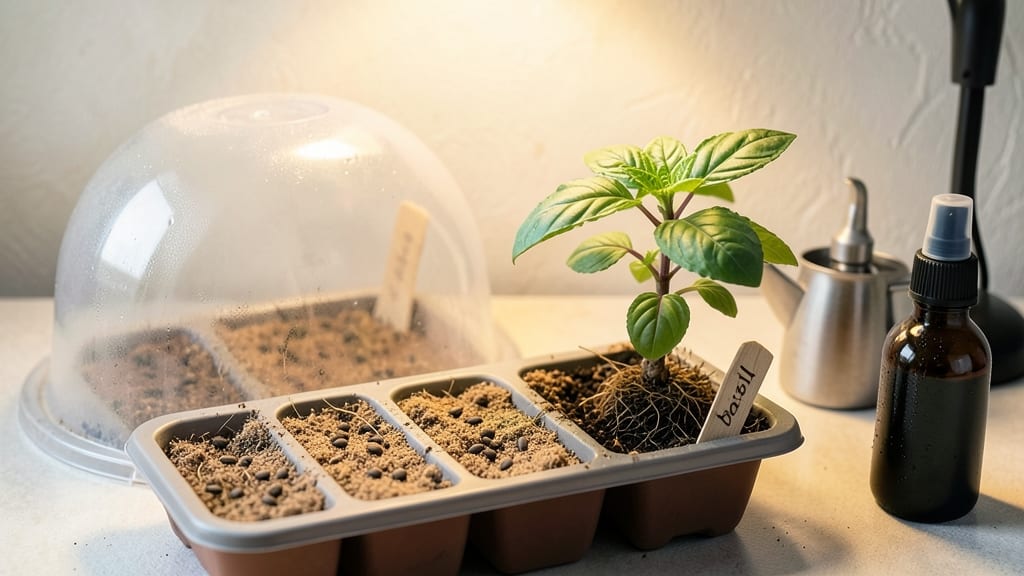
Growing basil from seed indoors lets you harvest fresh leaves year-round—no more wilted grocery store bunches. 🌱 The trick to success starts with the right seed variety and a warm, moist environment that speeds germination from days to hours.
My first batch took 14 days to sprout; now I get seedlings in just 3-5 days using these simple tweaks.
You’ll need a shallow container, seed-starting mix, and a heat source (like a seedling mat or warm windowsill). Basil seeds are tiny, so scatter them lightly on damp soil and press them in—no need to bury them deep.
Keep the soil consistently moist but never soggy, and cover the container with plastic wrap until sprouts appear. This creates a mini greenhouse effect that basil loves.
Once seedlings emerge, move them to bright light (a south-facing window or grow light) and thin them to 2-3 inches apart. You’ll notice the first true leaves in about 2 weeks, and by month 3, you’ll be pinching back stems to encourage bushier growth.
The smell of fresh basil in your kitchen will make every step worth it.
When outdoor temperatures stay above 50°F at night, you can transplant seedlings outside for even more growth. But even if you keep them indoors, proper care means you’ll have a steady supply of fragrant leaves for pesto, salads, and more—no grocery store required.
📚 In This Guide
- What you need
- Instructions
- Tips and common mistakes
- Wrapping up and next steps
What you need
- ● Basil seeds: 5–10 seeds (choose a variety like Genovese, Sweet Basil, or Thai Basil)
- ● Seed-starting trays or small pots: 2–4 (2–3 inches deep) with drainage holes
- ● Seed-starting mix: 1–2 cups (lightweight, sterile, and well-draining)
- ● Plastic wrap or clear lid: 1 (to create a humidity dome)
- ● Spray bottle with water: 1 (for gentle hydration)
- ● Grow lights or sunny windowsill: (6+ hours of light daily)
- ○ Heat mat (optional but helpful): 1 (70–80°F for faster germination)
- ● Fertilizer: A balanced liquid fertilizer (diluted to half-strength) for seedlings
- ● Humidity dome kit: (if not using plastic wrap)
- ● pH testing kit: (to ensure soil pH is 6.0–7.0)
- ● Plant labels: (to track varieties)
Step-by-step instructions for growing basil from seed indoors
Here’s my foolproof method for fast, healthy basil starts—no leggy seedlings or weak growth.
🌱 Step 1: Prep Seeds and Containers for Faster Germination
Basil seeds have a tough outer shell, so I soak them in lukewarm water for 12 hours first. This softens the coating and speeds up germination to just 5-7 days instead of 2 weeks. While they soak, fill 4-inch pots with moistened seed-starting mix—press it down lightly so it’s firm but not compacted.
Use a spoon or pencil to make a ¼-inch-deep hole in each pot. Basil seeds are tiny, so I plant 2-3 seeds per pot to ensure at least one sprouts. Cover them with a thin layer of soil—just enough to hide them completely. Don’t press down; basil roots need air to grow.
💧 Step 2: Create a Humid, Warm Germination Environment
Place the pots in a clear plastic bag or under a humidity dome to trap warmth and moisture. Basil seeds germinate best at 75-80°F, so I set them on top of my fridge or use a seedling heat mat if my home runs cooler. Keep them in indirect light—no direct sun yet—until sprouts appear.
Check the soil daily but only water when the surface feels dry to the touch. Overwatering now drowns seeds before they sprout. Once you see tiny green sprouts (usually 5-7 days), remove the cover immediately to prevent mold. Basil seedlings hate soggy conditions.
☀️ Step 3: Move to Bright Light and Thin Weak Seedlings
The moment seedlings emerge, place them under a grow light or within 2 inches of a south-facing window. Basil needs 12-14 hours of light daily to grow strong and compact. If leaves stretch toward the light (leggy growth), your light is too far away—move it closer or raise the seedlings.
When the first true leaves (not the tiny seed leaves) appear, thin to the strongest seedling per pot. Use scissors to snip weak stems at soil level—don’t pull them, or you’ll disturb the roots of the remaining plant. Water gently at the base after thinning to help the survivor establish.
🌿 Step 4: Fertilize and Encourage Bushy Growth
After 2-3 weeks, when seedlings have 4-5 leaves, feed them with a diluted liquid fertilizer (half-strength). I use a balanced 10-10-10 mix every 2 weeks to keep them growing lush. Pinch off the top set of leaves when the plant reaches 6 inches tall—this forces the basil to branch out and grow bushier.
Keep the soil evenly moist but never soggy. Basil roots rot easily, so let the top inch dry out between waterings. Rotate the pots a quarter turn daily so the plant grows straight instead of leaning toward the light. You’ll see new leaves emerge within a week—that’s your signal everything is working.
✂️ Step 5: Harvest and Maintain for Continuous Growth
Start harvesting the outer leaves when the plant reaches 8-10 inches tall. Always cut just above a leaf node (the point where leaves grow out) to encourage more growth. A healthy basil plant will regrow leaves within 1-2 weeks—this keeps it productive without stunting it.
If your basil flowers, pinch them off immediately. Flowering signals the end of the plant’s life cycle, and the leaves become bitter. Keep the plant in bright light and fertilize monthly to maintain vigor. With proper care, your indoor basil will keep producing fresh leaves for months.
Tips & tricks for perfect indoor basil growth
Here's what nobody tells you about growing basil from seed that'll make all the difference.
Soaking Secret: That 12-hour soak in lukewarm water isn't just about speeding up germination—it's also your chance to check seed quality. Discard any seeds that float to the surface; they won't sprout. The ones that sink will give you those lush, healthy starts you're after. I also add a drop of hydrogen peroxide to the water (1 part to 10 parts water) to prevent mold during germination.
Temperature Matters: Those 75-80°F conditions aren't just ideal—they're critical. If your home runs cooler, place your seed-starting pots on top of your fridge or use a seedling heat mat. I've seen germination times double when seeds are kept too cool. Pro tip: Check the temperature with a thermometer—your kitchen might be cooler than you think, especially near windows.
Lighting Strategy: The 12-14 hours of light requirement is non-negotiable for compact growth. If you're using a grow light, position it just 2-3 inches above the seedlings. I find that raising the light slightly every few days prevents leggy growth. For window placement, south-facing is best, but west-facing windows work too—just rotate your pots daily to keep them growing straight.
Thinning Technique: When you're thinning to the strongest seedling, don't just grab and pull. Use clean scissors to snip at soil level—this prevents disturbing the roots of your remaining plant. I've learned this the hard way: pulling seedlings can uproot your survivor and create gaps that attract pests. After thinning, give the soil a gentle watering to help the remaining plant establish.
Pro Tips for Grow Basil From Seed Indoors
- Here's what nobody tells you about growing basil from seed that'll make all the difference.
- Soaking Secret: That 12-hour soak in lukewarm water isn't just about speeding up germination—it's also your chance to...
- Temperature Matters: Those 75-80°F conditions aren't just ideal—they're critical. If your home runs cooler, place you...
Frequently asked questions
Got questions about growing basil from seed indoors?
You’re not alone! Here are answers to the most common queries to help you cultivate thriving basil plants with confidence.
How long does it take for basil seeds to germinate indoors?
Basil seeds typically germinate in 7–14 days indoors, depending on warmth and moisture. For faster results, use a seedling heat mat (70–75°F) and keep soil consistently damp. Patience is key—don’t overwater, or seeds may rot before sprouting!
Can I grow basil from seed without sunlight?
Basil thrives under grow lights (12–16 hours/day) if natural light is limited. Use a full-spectrum LED 2–3 inches above seedlings. Without light, seedlings may grow leggy or weak—supplement with lights until you can transplant outdoors (if desired).
Why are my basil seedlings turning yellow or wilting?
Yellowing leaves often signal overwatering or poor drainage. Let the top inch of soil dry between waterings, and ensure pots have drainage holes. Wilting can also mean underwatering or transplant shock—check roots gently and adjust care.
Do I need to thin basil seedlings, and how?
Yes! Thin seedlings to 12–18 inches apart once they have 2–3 true leaves. Use scissors to snip (not pull) to avoid disturbing roots. The strongest seedling should remain—harvest thinned plants for pesto or compost. Pro tip: Snip leaves from the top to encourage bushier growth!
Can I grow basil indoors year-round, and what’s the best container?
Yes! Basil grows well indoors year-round with proper light and care. Use 5–6 inch pots (or larger) with drainage holes. Opt for terracotta or fabric pots to prevent root rot. Rotate plants weekly for even growth, and fertilize lightly every 4–6 weeks with a balanced liquid fertilizer.
Wrapping up and next steps
Growing basil from seed indoors isn’t just rewarding—it’s easy once you know the tricks! With the right setup, patience, and a dash of warmth, you’ll soon enjoy a thriving herb garden right on your windowsill. 🌱✨
Now that you’re armed with speed-germination tips, take the next step: Start with just one seed to practice, or dive in with a full tray for bold flavors. Whether you’re a beginner or a seasoned gardener, your kitchen—and taste buds—will thank you!