Container Gardens
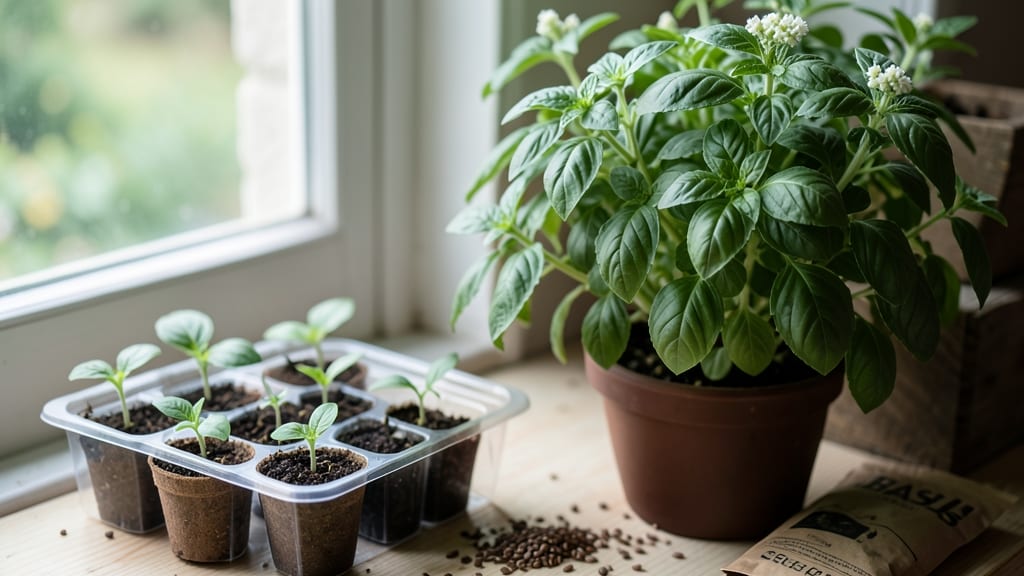
Growing basil from seed in containers lets you turn a sunny windowsill into a fragrant herb garden—4 weeks to your first harvest. 🌱 I’ve grown basil this way for years, and the secret isn’t fancy equipment but matching the plant’s needs to your space.
Most people overwater or underlight, but once you nail these basics, you’ll have lush, productive plants all season long.
The right setup starts with 5-7 inch containers (bigger for multiple plants) and a well-draining potting mix—no heavy garden soil. Plant seeds just ¼ inch deep, keep them warm (70°F+), and use a humidity dome or plastic wrap until sprouts appear.
Sunlight is non-negotiable: 6+ hours daily of bright, direct light, whether from a south-facing window or grow lights. Skip the cheap, flimsy pots—they wilt faster and hold moisture poorly.
By week 4, you’ll pinch back the top leaves to encourage bushier growth, and those first tender leaves will be ready for pesto or sandwiches. The plants stay productive for 6+ months with proper care, and you’ll avoid the bitterness that comes from overcrowding.
Bonus: Basil deters pests like mosquitoes and flies, so your container garden doubles as a natural repellent.
Works for any kitchen, balcony, or sunny nook—even if you’ve killed plants before. The key is consistency: water when the top inch feels dry, rotate containers weekly for even growth, and harvest regularly to keep them thriving. Here’s how to make it foolproof from start to harvest.
📚 In This Guide
- What you need
- Instructions
- Tips and common mistakes
- Wrapping up and next steps
What you need
- ● Basil seeds: 5–10 seeds (non-GMO, organic preferred for best flavor).
- ● Container: Minimum 4-inch diameter (6+ inches ideal for multiple plants).
- ● Must have drainage holes (or drill your own!).
- ● Options: Ceramic pots, fabric grow bags, or recycled yogurt cups (with holes).
- ● Potting mix: 1–2 cups of well-draining, seed-starting mix (avoid garden soil—it’s too dense!).
- ● Watering can or spray bottle: With a fine mist nozzle (overwatering is the #1 enemy!).
- ● Grow lights or sunny windowsill: Natural light: 6+ hours of direct sunlight daily (south-facing window is ideal).
- ● Artificial light: LED grow light (12–16 hours/day if indoors).
- ● Seedling heat mat: Speeds up germination (70–80°F is perfect!).
- ● Humidity dome or plastic wrap: Keeps seeds cozy while sprouting.
- ● Fertilizer: Balanced liquid fertilizer (5-5-5 or 10-10-10) or organic options like fish emulsion.
- ● Pruning shears: For harvesting and shaping your basil plant.
- ● Label markers: To track planting dates (trust us, you’ll forget!).
Step-by-step instructions for growing basil from seed in containers
Here's how to grow bushy, flavorful basil plants from seed in just 4 weeks—no greenhouse needed.
🌱 Step 1: Prepare Containers and Seed Starting Mix
Choose 4-inch diameter containers with drainage holes—smaller pots prevent leggy growth while keeping roots contained. Fill each container with sterile seed-starting mix (never garden soil) up to 1 inch below the rim. I like to press the mix down lightly with my fingers to create a firm, even surface—this prevents air pockets that could delay germination.
Moisten the mix until it feels like a damp sponge when squeezed. You want it to hold together but not drip water. A spray bottle works best here—overwatering now can cause seeds to rot before they sprout. Place the containers in a warm spot (around 70-75°F) where they won’t be disturbed.
🌱 Step 2: Sow Seeds and Maintain Optimal Germination Conditions
Sow 2-3 seeds per container at a depth of 1/4 inch—about the width of a pencil lead. Planting too deep slows germination, while planting too shallow risks drying out the seeds. Cover lightly with a thin layer of additional mix, then mist gently until the surface looks evenly damp.
Cover each container with a clear plastic dome or plastic wrap to retain warmth and humidity. Basil seeds germinate best in 75-85°F soil, so a seedling heat mat helps if your home runs cooler. Expect sprouts in 7-10 days, but don’t be surprised if some take up to 14 days—seed quality and temperature play big roles here.
☀️ Step 3: Provide Bright, Indirect Light After Germination
The moment you see first true leaves (not the initial seed leaves), remove the plastic cover immediately. Basil seedlings need 12-14 hours of bright, indirect light daily to prevent leggy growth. A south-facing window works, but if your light is weak, supplement with a grow light positioned 2-3 inches above the plants.
Rotate the containers a quarter turn daily so seedlings grow straight rather than leaning toward the light. You’ll know your light is sufficient when leaves are dark green and compact—pale, stretched leaves mean it’s time to move closer to the light source.
💧 Step 4: Water and Fertilize for Bushy Growth
Water when the top inch of soil feels dry to the touch, but avoid soggy soil—basil roots rot easily in waterlogged conditions. Use room-temperature water and water at the base to prevent fungal diseases. Once seedlings have 4-5 true leaves (about 3 weeks after sowing), apply a balanced liquid fertilizer (like 10-10-10) at half strength. This jumpstarts robust growth without burning tender leaves.
Pinch off the top set of leaves when plants reach 4-6 inches tall to encourage bushier growth. This might seem counterintuitive, but it triggers side shoots that create a fuller, more productive plant. Repeat this pinching every 2-3 weeks to maintain a compact shape.
✂️ Step 5: Harvest and Maintain for Continuous Production
Start harvesting outer leaves when plants reach 6-8 inches tall, leaving the inner leaves intact. This encourages regrowth and prevents the plant from flowering too soon (which makes leaves bitter). Harvest in the morning after dew has dried—this preserves flavor and texture.
Continue fertilizing every 2-3 weeks with half-strength liquid fertilizer and pinch back leggy stems to maintain shape. With consistent care, your basil plants will produce harvestable leaves for 6-8 weeks before needing a rest. Save seeds from the best plants for next season!
Tips & tricks for growing basil from seed in containers
These simple strategies will help you grow thriving basil plants that stay bushy and productive for weeks.
Container Selection: While 4-inch containers work perfectly, consider using 6-inch pots if you want larger plants with more leaves. Just ensure they still have drainage holes—this prevents root rot and keeps your basil healthy. Plastic containers with built-in saucers are great because they collect excess water, preventing messes on your countertops.
Germination Boost: Basil seeds are tiny, so I recommend placing them on a damp paper towel in a sealed container for 24 hours before planting. This pre-soaking jumpstarts germination, helping you see sprouts in the 7-10 day range rather than waiting up to 14 days. Just be sure to plant them immediately after they've sprouted to avoid drying out.
Lighting Troubleshooting: If your seedlings start stretching toward the light (a sign of legginess), move them 1-2 inches closer to the light source immediately. For indoor growers, a T5 LED grow light on a timer set for 12-14 hours daily works wonders—just position it 2-3 inches above the plants to prevent heat stress. The goal is bright, indirect light that encourages compact growth.
Fertilizer Timing: The 3-week mark is perfect for your first fertilizer application because that's when seedlings develop their 4-5 true leaves. I use a fish emulsion (diluted to half strength) because it's gentle on tender roots while providing essential nutrients. After that, stick to the 2-3 week schedule—over-fertilizing can burn delicate basil leaves.
Pro Tips for Growing Basil From Seed In Containers
- These simple strategies will help you grow thriving basil plants that stay bushy and productive for weeks.
- Container Selection: While 4-inch containers work perfectly, consider using 6-inch pots if you want larger plants wit...
- Germination Boost: Basil seeds are tiny, so I recommend placing them on a damp paper towel in a sealed container for ...
Frequently asked questions
Got questions about growing basil from seed in containers? We’ve got answers! Here are some of the most common concerns—plus quick fixes to keep your herb garden thriving.
How long does it take for basil seeds to germinate?
Basil seeds typically germinate in 7–14 days when kept warm (around 70–80°F) and moist. If you’re impatient, try a seedling heat mat or place pots near a sunny window. Patience pays off—just keep the soil damp and avoid overwatering!
What’s the best container size for growing basil?
Aim for at least 6–8 inches deep and 6–12 inches wide per plant. Basil has shallow roots but needs room to spread. Use containers with drainage holes to prevent soggy soil, and consider self-watering pots if you travel often.
Can I grow basil indoors year-round?
Yes! Basil thrives indoors with 6+ hours of sunlight daily (a south-facing window or grow lights work). In winter, supplement with a LED grow bulb if natural light is weak. Just watch for leggy growth—rotate pots weekly for even exposure.
Why are my basil seedlings turning yellow or wilting?
Yellow leaves often signal overwatering or poor drainage. Let the top inch of soil dry out between waterings, and check for pests like aphids (wipe with soapy water if needed). Wilting can also mean underwatering—basil loves moisture but hates soggy roots!
Can I grow basil in small spaces like hanging pots?
Basil adapts well to hanging baskets, vertical planters, or even repurposed mugs (as long as they’re deep enough). Just ensure the container has drainage and place it where it gets plenty of light. Dwarf varieties like ‘Spicy Globe’ are perfect for tight spaces!
Wrapping up and next steps
Growing basil from seed in containers is a rewarding journey that brings fresh, flavorful herbs right to your kitchen counter! With just a few supplies, patience, and a little care, you’ll enjoy a thriving compact herb garden in just 4 weeks.
Whether you’re a beginner or a seasoned green thumb, this project is simple, cost-effective, and perfect for small spaces.
Now that you’re armed with tips and tricks, take the next step—plant those seeds and watch your basil grow! Share your progress with fellow gardeners or experiment with recipes using your homegrown harvest. Happy growing! 🌱✨