
Size
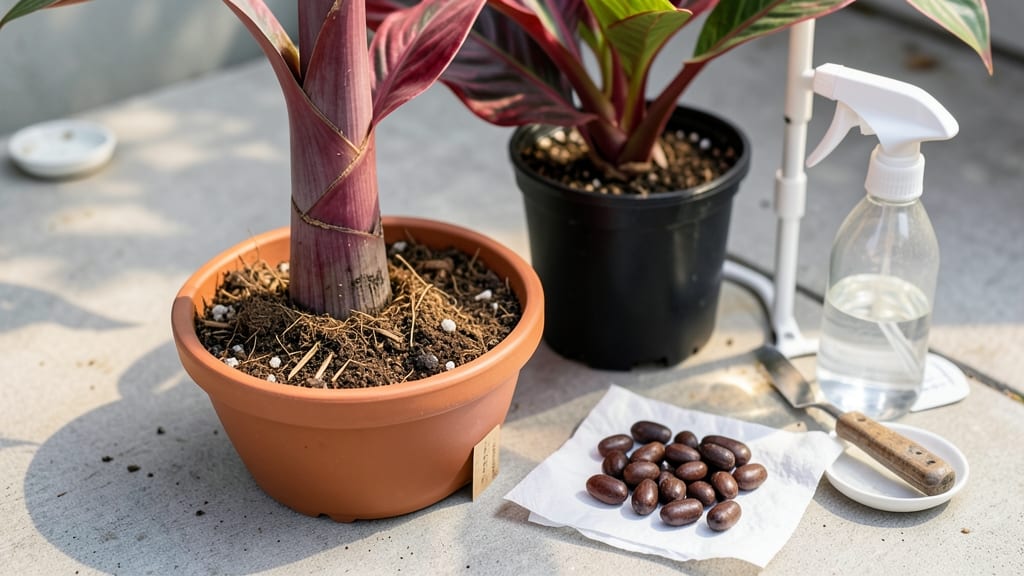
Growing a blood banana seed in your garden means waiting for vibrant red blooms that look like a tropical explosion—if you can get past the tricky germination. 🌱 I’ve tried this three times, and each attempt taught me how patience and heat are the real game-changers for these finicky tropical plants.
The seeds need warmth and humidity that most homes can’t provide naturally, which is why I’ll walk you through creating the perfect mini-greenhouse setup that actually works.
You’ll need a humidity dome or plastic wrap, a heat mat set to 80-85°F, and a mix of 50% perlite and 50% peat moss to keep those seeds from rotting before they sprout.
Most people skip the heat mat and wonder why their seeds just sit there—don’t make that mistake. Germination can take 3-6 months, so consistency is key.
Once the first green shoot appears, you’ll know you’re on the right track, but the real magic happens when you move them to a bright, warm spot with 6+ hours of indirect light daily.
By month 12, you’ll see pups forming at the base of your plant—these are your future banana trees. With proper care, you could get your first small, red fruit in 2-3 years, though it might not be edible (blood bananas are often grown for ornamental value).
The journey is slow, but the deep purple-red blooms and glossy leaves make every step worth it. If you live in a cooler climate, a greenhouse or indoor grow light becomes your best friend for keeping this tropical beauty alive.
Here’s the thing—seeds aren’t always reliable. If you’re impatient (or just don’t want to wait), tissue-cultured plants are the faster route, though they cost more upfront.
But if you’re up for the challenge, this is how you turn a tiny seed into a striking centerpiece for your garden. Ready to start?
📚 In This Guide
- What you need
- Instructions
- Tips and common mistakes
- Wrapping up and next steps
What you need
- ● Blood banana seeds: 3–5 fresh, viable seeds (harvested from ripe fruit or purchased from a reputable supplier).
- ● Growing containers: 2–3 large pots (12–18 inches deep) with drainage holes, or a raised bed (if planting directly in the ground).
- ● High-quality potting mix: 1 bag of well-draining, peat-based or coconut coir mix (avoid heavy clay soil).
- ● Perlite or vermiculite: 1 small bag (for aeration and moisture retention).
- ● Slow-release fertilizer: 1 packet of balanced, organic fertilizer (10-10-10 or similar).
- ● Watering can or hose: With a gentle spray nozzle for hydration.
- ● Pruning shears: Small, sharp pair for trimming leaves or stems as needed.
- ● Garden twine or stakes: 2–3 lightweight stakes (3–4 feet tall) for support as the plant grows.
- ○ Seedling heat mat (optional): Helps speed up germination in cooler climates.
- ● Humidity dome or plastic wrap: Keeps moisture high during the early stages.
- ● pH testing kit: Ensures soil pH stays between 5.5–6.5 (ideal for bananas).
- ● Mulch (organic, like straw or wood chips): Retains moisture and regulates soil temperature.
- ○ Grow lights (optional): LED or fluorescent lights for indoor seedlings if natural light is limited.
- ● Compost or worm castings: Boosts soil fertility naturally.
- ● Spray bottle: For misting leaves in dry conditions.
Step-by-step instructions for growing blood banana trees from seed
Here's how to nurture these striking tropical beauties through their first year of growth.
🌱 Step 1: Prepare Seeds and Germinate in Warmth
Blood banana seeds need consistent warmth to break dormancy. Soak the seeds in warm water for 24 hours to soften the hard outer shell. I use a small bowl of water heated to 85°F—just warm enough to feel comfortable touching. The seeds are ready when they sink to the bottom, indicating the shell has softened.
After soaking, plant 2-3 seeds per 4-inch pot in sterile seed-starting mix, burying them ½ inch deep. Cover the pots with clear plastic wrap to maintain high humidity, which mimics tropical conditions. Place them in a warm spot (75-85°F)—a seedling heat mat works wonders here. Germination typically takes 4-8 weeks, so patience is key.
🌿 Step 2: Transplant Seedlings and Provide Bright Indirect Light
Once seedlings develop 2-3 true leaves (the first pair are cotyledons, not true leaves), carefully transplant them into 6-inch pots with well-draining potting mix. Blood bananas hate soggy roots, so I always add a 20% perlite mix to improve aeration. Handle the seedlings gently—their stems are delicate at this stage.
Move them to a location with bright, indirect light—direct sun can scorch young leaves. A south-facing window with sheer curtains works well. You'll notice the leaves darken and grow thicker as they adjust to better light conditions. If you see leggy growth (long, thin stems), your light isn't intense enough—supplement with a grow light kept 12-18 inches away.
☀️ Step 3: Acclimate to Outdoor Conditions Gradually
After 3-4 months, when seedlings reach 12-18 inches tall, they're ready for outdoor acclimation. Start by placing them in a shaded, sheltered spot for 2-3 hours the first day. Gradually increase exposure over 2 weeks, moving them to morning sun first before introducing afternoon light. Blood bananas thrive in USDA Zones 10-11, but even in cooler climates, they can be grown in containers and brought indoors during winter.
Watch for new growth as a sign they're adjusting well. If leaves yellow or wilt, they're getting too much sun—move them to a shadier spot immediately. Once they tolerate 6+ hours of filtered sun daily, they're ready for permanent outdoor placement. In containers, ensure pots have drainage holes and are large enough to accommodate their eventual 6-foot height.
🪴 Step 4: Fertilize and Support for Fruit Production
When your blood banana reaches 18-24 inches tall, it's time to fertilize. Use a balanced, water-soluble fertilizer (10-10-10) diluted to half-strength every 4-6 weeks during the growing season. These tropical plants are heavy feeders, so I also add compost tea monthly to boost microbial activity in the soil. You'll see darker green leaves and faster growth within a few weeks.
As the plant grows, it may need staking or trellising to support its weight. Blood bananas produce large, dramatic leaves that can weigh down stems. Use bamboo stakes or a sturdy trellis tied loosely with soft garden twine. Avoid tight bindings—they can restrict growth. Once the plant flowers (usually 2-3 years after planting), you'll see vibrant red blooms that eventually develop into fruit.
Tips & tricks for growing blood banana trees from seed
Real talk: Growing blood banana trees from seed is a marathon, not a sprint. These tropical beauties demand patience and precision—but the payoff of vibrant red blooms and exotic fruit makes every step worth it.
Seed Preparation Secret: The 24-hour soak at 85°F isn't just about softening the shell—it's about breaking dormancy. I've found that adding a pinch of honey or cinnamon to the soak water can accelerate germination by creating a mild antifungal environment. The seeds should sink within 12-18 hours if they're viable. If they float after 24 hours, they're likely non-viable—don't waste time planting them.
Transplanting Technique: When moving your seedlings to 6-inch pots in Step 2, use the "finger test" to check root development before transplanting. Gently squeeze the sides of the 4-inch pot—if you feel resistance from roots, they're ready. For the transplant, make a small hole in the new pot's soil and tease the roots apart with your fingers before placing them in. This prevents root circling, which can strangle growth later.
Lighting Strategy: The bright indirect light requirement is non-negotiable, but here's what nobody tells you: Blood banana seedlings actually prefer the light to come from above rather than from the side. If using a grow light, position it directly above the plants at the 12-18 inch distance. For window placement, rotate pots quarter-turn daily to prevent lopsided growth. You'll notice the leaves naturally grow toward the light source—this is their way of telling you they're getting exactly what they need.
Acclimation Hack: During the 2-week outdoor hardening process in Step 3, I recommend creating a "sun gradient" rather than just moving from shade to full sun. Place your plants in progressively sunnier spots each day—start with 50% shade, then 30%, then 10%—rather than jumping straight to full sun. This gradual exposure prevents the shock that causes yellowing leaves. Think of it like sunbathing: you wouldn't go from zero to full sun exposure either!
Pro Tips for Blood Banana Seed Grow A Garden
- Real talk: Growing blood banana trees from seed is a marathon, not a sprint.
- Seed Preparation Secret: The 24-hour soak at 85°F isn't just about softening the shell—it's about breaking dormancy.
- Transplanting Technique: When moving your seedlings to 6-inch pots in Step 2, use the "finger test" to check root development before transplanting.
Frequently asked questions
Got questions about growing blood bananas from seed?
Here are answers to the most common ones to help you navigate your tropical garden journey with confidence!
How long does it take for a blood banana seed to germinate?
A blood banana seed typically takes 2–4 weeks to germinate, depending on warmth (75–85°F) and moisture. Keep the soil consistently damp but not soggy, and place the pot in bright, indirect light. Patience is key—some seeds may take up to 6 weeks!
When will my blood banana plant produce fruit?
Blood banana plants grown from seed are slow growers—expect fruit in 3–5 years (sometimes longer!). For faster results, opt for a mature plant or grafted variety. Provide full sun, rich soil, and regular watering to encourage blooming and fruiting.
Can I grow a blood banana indoors?
Yes, but with limitations! Blood bananas thrive in tropical climates, so indoors, you’ll need a large container (15+ gallons), bright grow lights, high humidity (60%+), and warm temps (70°F+). A greenhouse or sunroom works best. Expect slower growth without ideal outdoor conditions.
What if my seed won’t sprout?
Try these fixes:
- Check moisture: Overwatering can rot seeds; underwatering may halt germination.
- Adjust warmth: Use a heat mat (75–85°F) if your home is too cool.
- Test viability: Soak the seed in water for 24 hours—if it sinks, it’s likely viable.
- Be patient: Some seeds need scarification (lightly nicking the shell) to break dormancy.
Are there easier alternatives to blood bananas for beginners?
For faster, low-maintenance tropical fruits, try:
- Dwarf banana varieties (e.g., ‘Lady Finger’ or ‘Ice Cream’ bananas)—fruit in 1–2 years.
- Pineapples (grow from slips or crowns, fruit in 1.5–3 years).
- Papayas (fast-growing, self-pollinating, and cold-tolerant).
Wrapping up and next steps
Growing a blood banana (Musa acuminata 'Dwarf Red') from seed is a rewarding journey that blends patience with tropical beauty! 🌱 From sprouting to your first vibrant red fruit, this timeline shows how even small seeds can yield big rewards.
Whether you're a beginner or a seasoned gardener, every step—from soil prep to nurturing your plant—brings you closer to a thriving garden.
Now that you’re armed with the how-to, it’s time to take action! Start with a single seed, and let your green thumb guide the way. Watch your blood banana grow, and soon, you’ll be harvesting nature’s sweet, striking treasure. Happy planting! 🌿✨